

Who this guide is for:
This guide is designed for individuals who have experienced a work-related injury or illness and want to better understand the workers' compensation process before selecting an attorney. It provides educational information and practical questions to help you compare legal representation, understand your rights, and make informed decisions with greater confidence.
Whether you're filing a new claim, appealing a denied claim, or simply researching your options, this checklist is intended to help you prepare for meaningful conversations with prospective attorneys. The information presented is educational in nature and should not be considered legal advice.




14 Questions to Ask before Hiring a Workman's Compensation Lawyer
Understanding when and why to hire a workers' compensation attorney can be crucial to the success of your claim. Here, we address some of the most frequently asked questions to help you make informed decisions.
How much of your practice is devoted specifically to workers’ compensation cases?
Workers’ compensation law is highly specialized and governed by state-specific rules. An attorney who regularly handles these cases will understand filing deadlines, medical documentation requirements, and hearing procedures better than a general practitioner.
How many workers’ compensation cases have you handled in the past year?
Experience matters. Ask about recent case volume to determine whether the attorney actively practices in this area or only handles occasional claims.
Have you handled cases similar to mine?
Workplace injury cases can vary widely:
- Repetitive stress injuries
- Construction accidents
- Occupational illness
- Permanent disability claims
- Denied claims
An attorney familiar with your type of injury may better anticipate challenges.
What is your success rate with settlements or hearings?
While no lawyer can guarantee results, you can ask:
- How often do cases settle?
- How often do cases go to hearing?
- What factors typically affect outcomes?
This helps you understand their litigation and negotiation experience.
Will you personally handle my case?
Some firms assign cases to junior attorneys or paralegals. Clarify:
- Who will be your primary contact?
- Who appears at hearings?
- Who negotiates settlements?
Consistency in representation can improve communication and strategy.

How are fees structured?
Most workers’ compensation attorneys work on a contingency fee basis, meaning they are paid a percentage of benefits recovered.
Ask:
- What percentage is charged?
- Is the fee regulated by the state?
- Are fees subject to court approval?
Are there additional costs?
Even contingency cases may involve costs such as:
- Medical record retrieval
- Expert witness fees
- Filing fees
Clarify whether these are deducted from your settlement.
What benefits might I be entitled to?
A knowledgeable attorney should explain potential benefits, such as:
- Medical treatment coverage
- Temporary total disability (TTD)
- Permanent partial disability (PPD)
- Vocational rehabilitation
- Lump-sum settlements
Understanding potential compensation helps set realistic expectations.
How long will my case take?
Timeline depends on:
- Medical treatment duration
- Employer/insurance disputes
- State backlog
- Appeal requirements
Ask for a general estimate and what may speed up or delay the process.
What are the weaknesses in my case?
A trustworthy attorney should discuss risks honestly, including:
- Pre-existing conditions
- Delayed injury reporting
- Disputed medical causation
- Employer challenges
Transparency builds credibility.
What happens if my claim is denied?
Denials are common. Ask:
- Will you handle appeals?
- What is the deadline to appeal?
- What additional evidence might be required?
Appeal experience is critical.
How will we communicate?
Clear communication prevents frustration. Ask:
- How often will I receive updates?
- Who returns calls or emails?
- Is there an online case portal?
Have you represented clients before the state workers’ compensation board?
Each state has its own administrative system. Familiarity with local judges, hearing officers, and procedures can influence case management efficiency.
What should I be doing right now?
A good attorney may advise you to:
- Follow all medical treatment plans
- Avoid posting about your injury on social media
- Keep records of missed work
- Maintain copies of medical documents
Proactive clients often strengthen their cases.
Final Considerations Before Hiring
When comparing attorneys, consider:
- Experience specific to workers’ compensation
- Communication style
- Fee transparency
- Comfort level during consultation
- Reviews or testimonials
Choosing representation is an important decision. Take your time, compare options, and ask detailed questions
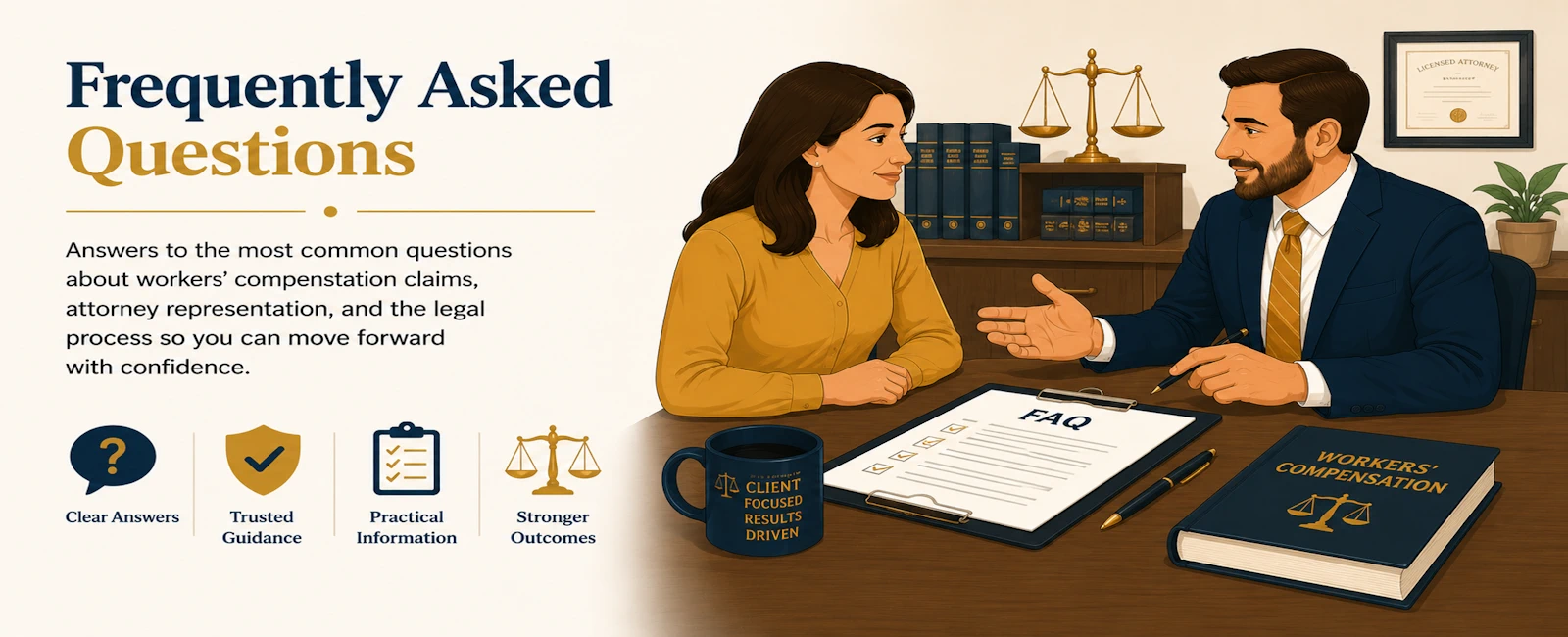
Do I Really Need a Workers' Compensation Lawyer?
Not every workers' compensation claim requires an attorney. If your injury is minor, your medical treatment is approved, and you're receiving the benefits you expect, you may be able to handle the claim on your own.
However, you should consider speaking with an attorney if your claim is denied, your employer disputes your injury, your benefits are delayed or reduced, you're asked to return to work before you're medically ready, or you've suffered a serious or permanent injury. Most workers' compensation attorneys offer a free initial consultation, giving you the opportunity to understand your rights before deciding how to proceed.
How Much Does a Workers' Compensation Attorney Cost?
Most workers' compensation attorneys work on a contingency fee basis. This means you generally do not pay attorney fees upfront. Instead, the attorney is paid a percentage of any settlement or award they recover on your behalf, subject to the laws and court approval requirements in your state.
During your consultation, ask how fees are calculated, whether you may be responsible for case-related expenses, and whether there are any costs if no recovery is obtained. A reputable attorney should explain these details clearly before you agree to representation.
What Happens During My First Consultation?
Your first consultation is an opportunity for both you and the attorney to determine whether you're a good fit to work together. The attorney will usually ask about how your injury occurred, your medical treatment, your employer, your current work status, and any benefits you've already received.
This is also your opportunity to ask questions. Bring any accident reports, medical records, insurance correspondence, and a list of questions you've prepared. The consultation should leave you with a clear understanding of your legal options, the next steps in the process, and what you can expect if you decide to move forward.
Can I Change Attorneys If I'm Not Satisfied?
Yes. In most cases, you have the right to change attorneys if you believe your current lawyer is not meeting your needs. Before making a change, ask how the transition will affect your case, whether important deadlines are approaching, and how attorney fees will be handled. Your new attorney can often help coordinate the transfer of your file and explain the next steps.
Will I Have to Go to Court?
Many workers' compensation claims are resolved without a formal hearing or trial. However, if there is a dispute over your injury, medical treatment, benefits, or your ability to return to work, a hearing before a workers' compensation judge or administrative board may be necessary. Your attorney can explain what to expect, prepare you for the process, and represent your interests throughout the proceedings.
How Long Does a Workers' Compensation Case Usually Take?
Every workers' compensation claim is different. Straightforward claims may be resolved within a few months, while disputed claims involving medical treatment, disability ratings, or appeals can take considerably longer. The length of your case depends on the facts, the complexity of the issues, and the procedures required under your state's workers' compensation system.
What Should I Bring to My First Meeting With an Attorney?
Bring any documents related to your injury and claim, including accident reports, medical records, insurance letters, wage information, photographs, and any correspondence you've received from your employer or the insurance company. It's also helpful to prepare a written timeline of events and a list of questions so you can make the most of your consultation.
What Should I Do Right After a Workplace Injury?
Report the injury to your employer as soon as possible and seek appropriate medical attention. Follow your doctor's treatment plan, keep copies of important documents, and maintain a record of your medical appointments and time away from work. If questions or disputes arise about your benefits, consulting an experienced workers' compensation attorney can help you better understand your rights and available options.
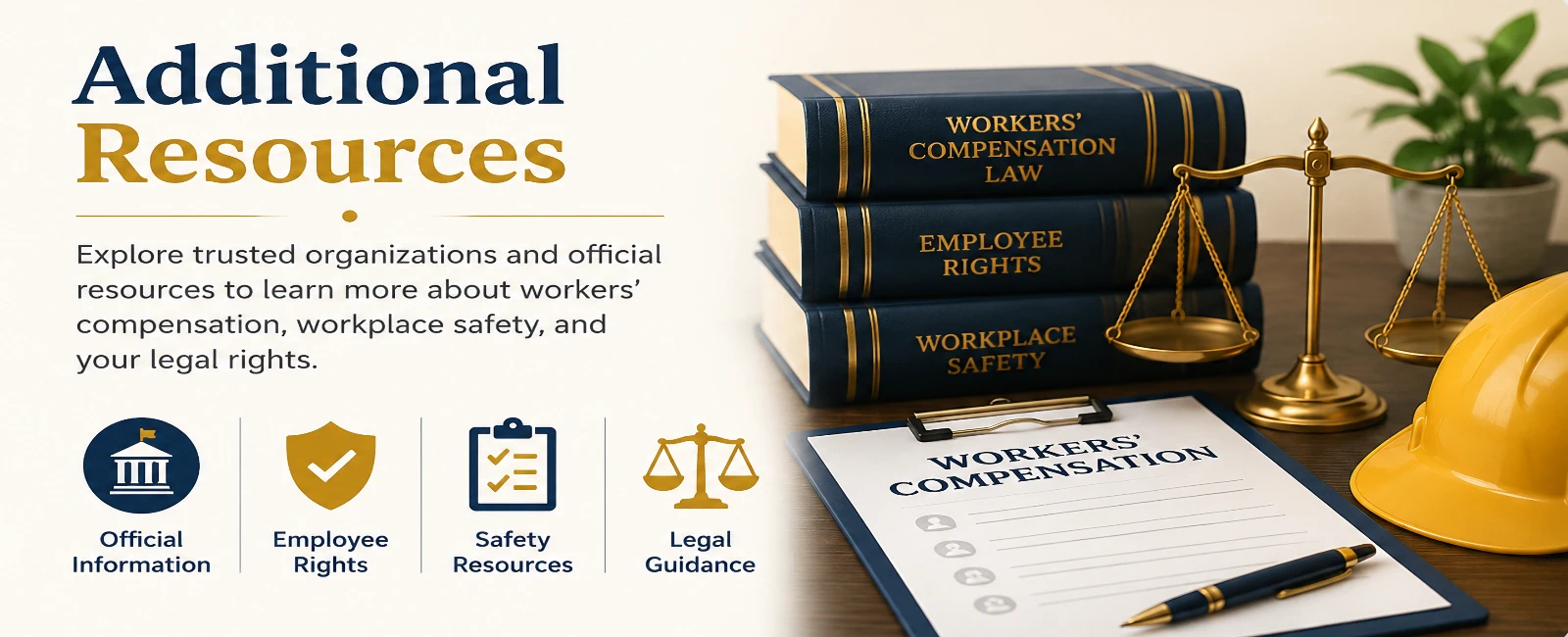
Before contacting an attorney, it can be helpful to review information provided by official government agencies and other trusted organizations. The following resources offer educational information about workers' compensation, workplace safety, employee rights, and related topics.

State Workers' Compensation Agency
Your state's workers' compensation agency provides information about filing claims, benefits, hearings, forms, deadlines, and employer responsibilities. Because workers' compensation laws vary by state, your state agency should be one of your primary sources for official information.

U.S. Department of Labor
The U.S. Department of Labor offers educational information about employee rights, workplace laws, wage protections, and federal labor programs. While workers' compensation is generally administered by individual states, the Department of Labor provides valuable guidance on many workplace-related topics.

OSHA
OSHA helps promote safe and healthy workplaces by providing safety standards, educational materials, and resources for workers and employers. If your injury involved unsafe working conditions, OSHA's website contains valuable safety information and reporting resources.
Questions to Ask Before Hiring an Attorney
Choosing the right attorney is one of the most important decisions you'll make after a workplace injury. Review our attorney hiring guide to learn what questions to ask during your consultation and how to compare your options with confidence.
State Workers' Compensation Agency
Your state's workers' compensation agency provides information about filing claims, benefits, hearings, forms, deadlines, and employer responsibilities. Because workers' compensation laws vary by state, your state agency should be one of your primary sources for official information.
U.S. Department of Labor
The U.S. Department of Labor offers educational information about employee rights, workplace laws, wage protections, and federal labor programs. While workers' compensation is generally administered by individual states, the Department of Labor provides valuable guidance on many workplace-related topics.
OSHA
OSHA helps promote safe and healthy workplaces by providing safety standards, educational materials, and resources for workers and employers. If your injury involved unsafe working conditions, OSHA's website contains valuable safety information and reporting resources.
Questions to Ask Before Hiring an Attorney
Choosing the right attorney is one of the most important decisions you'll make after a workplace injury. Review our attorney hiring guide to learn what questions to ask during your consultation and how to compare your options with confidence.
Still Have Questions?
Find a Workers Compensation Attorney
Every workplace injury and workers' compensation claim is unique, and the information provided in this guide is intended for general educational purposes only. If you have questions about reporting a work-related injury, medical treatment, wage loss benefits, denied claims, returning to work, permanent disability benefits, or protecting your rights under your state's workers' compensation laws, speaking with an experienced Workers' Compensation attorney can help you better understand your legal rights, available benefits, and the next steps that may be appropriate for your situation.