Who this guide is for:
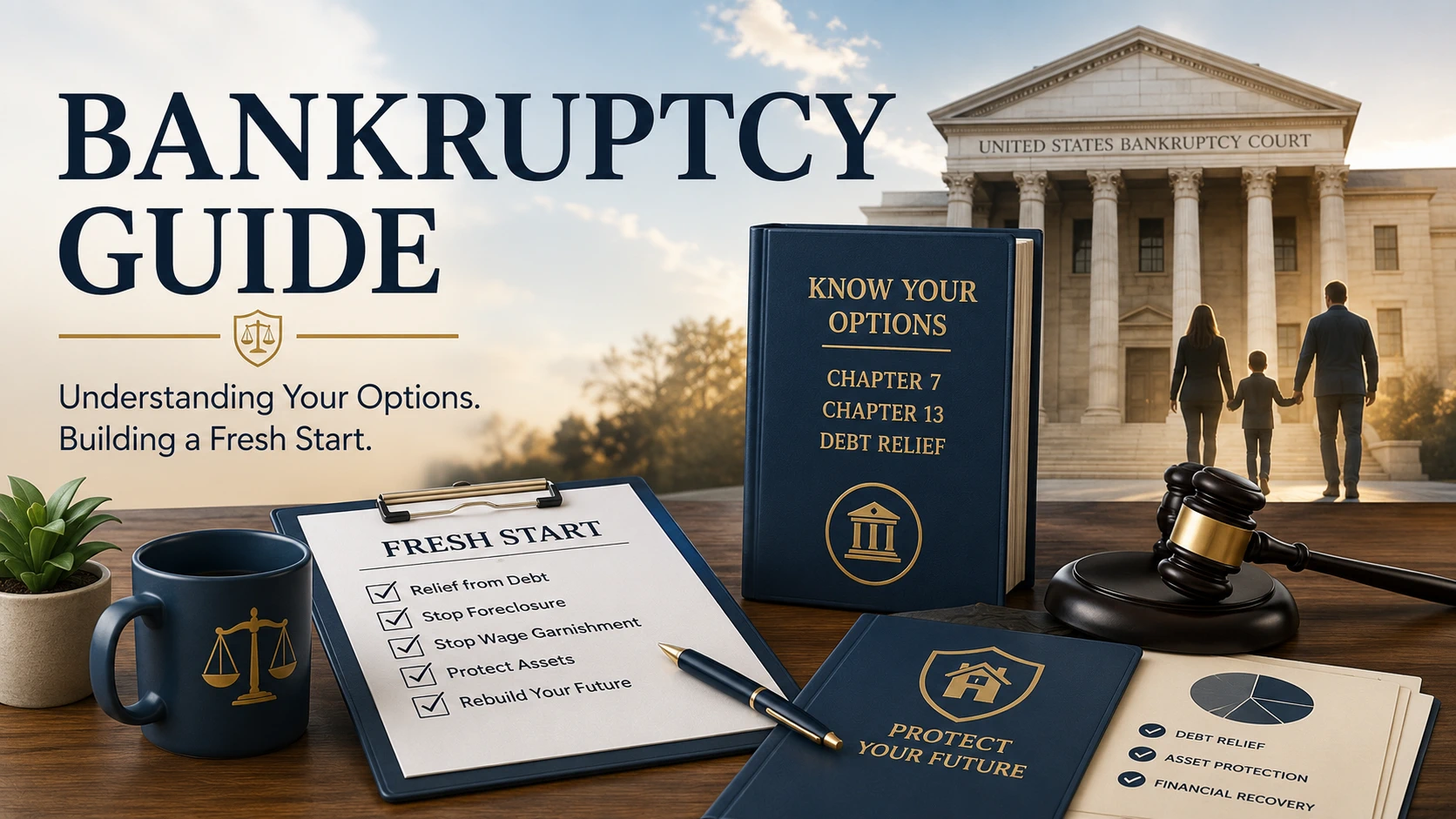
If you're struggling with overwhelming debt, facing collection calls, worried about foreclosure or wage garnishment, or simply trying to understand your financial options, this guide is for you. Filing for bankruptcy is a significant legal decision, and understanding the process before meeting with an attorney can help you feel more confident and prepared.
This Bankruptcy Guide provides practical questions to ask during a consultation, explains important concepts such as Chapter 7 and Chapter 13 bankruptcy, and offers educational resources to help you make informed decisions about your financial future. Whether you're exploring debt relief for yourself or helping a family member, this guide is designed to help you better understand your options before choosing legal representation.




Key Questions to Ask a Bankruptcy Attorney
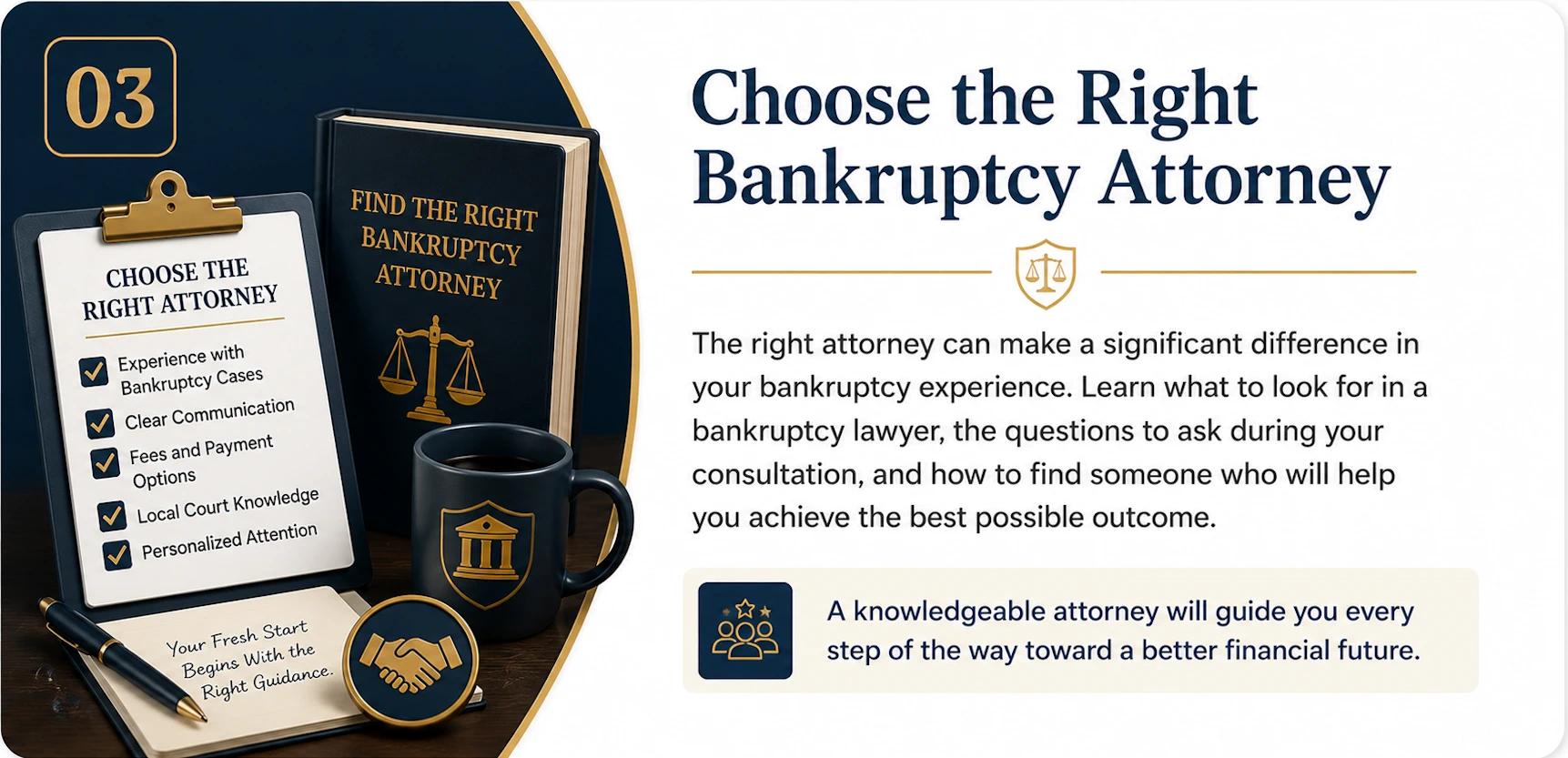
Choosing the right attorney begins with asking the right questions. This guide is designed to help you prepare for your consultation by identifying important topics to discuss, understanding your legal options, and comparing attorneys with confidence. While every case is unique, these questions can help you make a more informed decision before selecting legal representation.
How much experience do you have handling bankruptcy cases?
Ask whether the attorney regularly handles Chapter 7, Chapter 13, or other bankruptcy matters similar to your financial situation.
Which type of bankruptcy may apply to my situation?
Ask about the differences between:
- Chapter 7 bankruptcy
- Chapter 13 bankruptcy
- Debt reorganization options
and how each may affect your finances.
What debts can and cannot be discharged?
Certain debts may not be eliminated through bankruptcy, including:
- Some taxes
- Student loans
- Child support
- Alimony
- Certain court judgments
How are your legal fees structured?
Clarify:
- Flat fees
- Court filing costs
- Payment plans
- Additional administrative expenses
Will I lose my home, vehicle, or other assets?
Ask how exemption laws may apply to:
- Real estate
- Vehicles
- Retirement accounts
- Personal property
- Business assets
What documents will I need to provide?
Common documents may include:
- Tax returns
- Pay stubs
- Bank statements
- Debt records
- Asset information
- Monthly expense details
How long does the bankruptcy process typically take?
Timelines may vary depending on:
- Bankruptcy chapter
- Court schedules
- Creditor disputes
- Required financial counseling
What impact will bankruptcy have on my credit?
Ask about:
- Credit reporting timelines
- Rebuilding credit
- Future loan eligibility
- Mortgage considerations
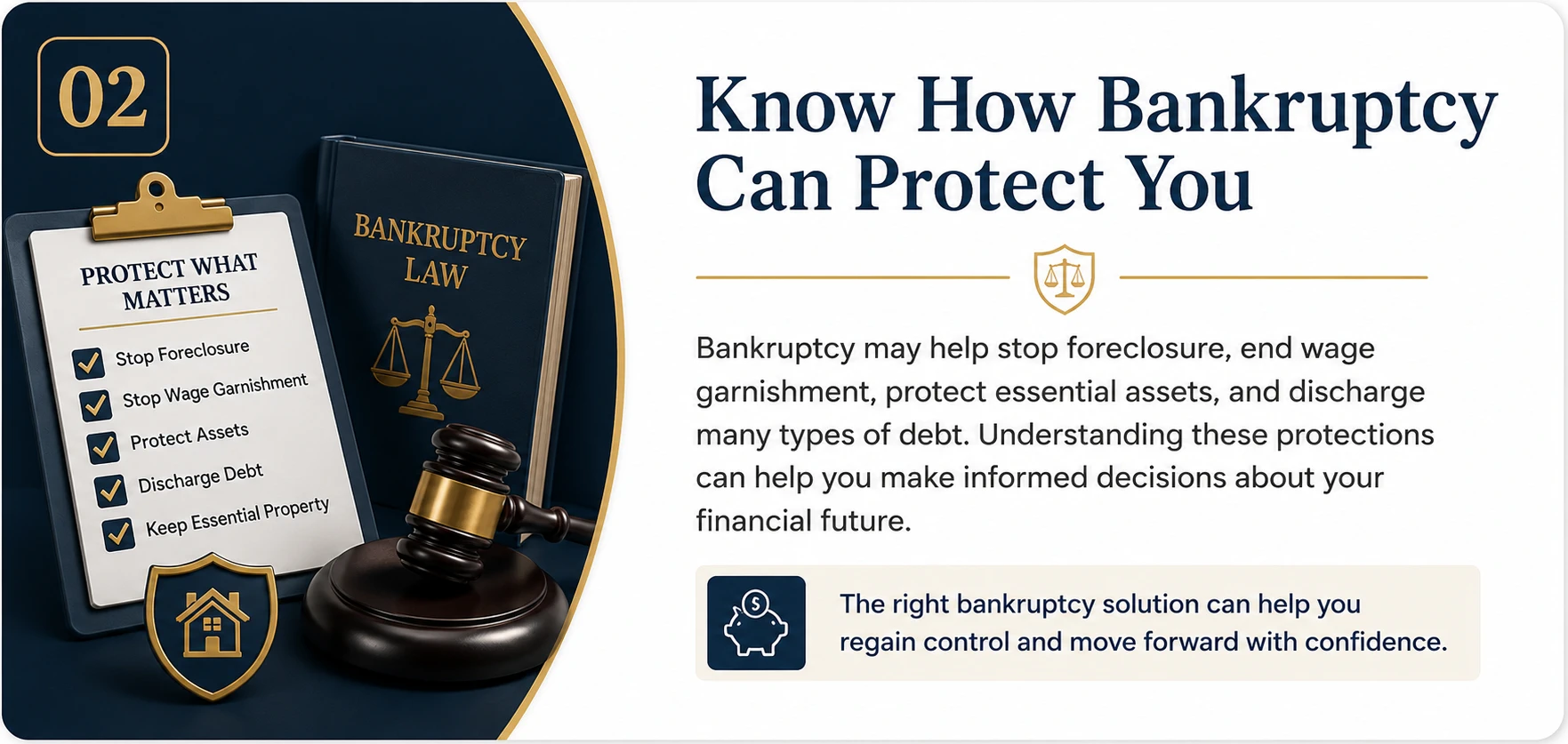
Will bankruptcy stop collection calls, lawsuits, or wage garnishments?
Ask how the automatic stay may affect:
- Collection efforts
- Foreclosures
- Repossessions
- Garnishments
- Pending lawsuits
Clarify whether the attorney you meet with will manage your case directly or delegate work to associates or support staff.
Important documents may include:
- Financial records
- Tax returns
- Bank statements
- Parenting schedules
- Property information
What happens during the meeting of creditors?
Ask what to expect at the required bankruptcy hearing and how to prepare for it.
Are there alternatives to bankruptcy?
Discuss whether options such as:
- Debt settlement
- Loan modification
- Credit counseling
- Repayment plans
may be appropriate for your situation.
What mistakes should I avoid before filing?
Important issues may include:
- Transferring assets
- Taking on new debt
- Withdrawing retirement funds
- Repaying certain creditors before filing
What happens if creditors object to my case?
Ask how disputes or objections from creditors may affect the bankruptcy process.
What steps should I take after bankruptcy is completed?
Ask about:
- Rebuilding credit
- Budgeting
- Financial planning
- Monitoring credit reports
- Avoiding future debt problems
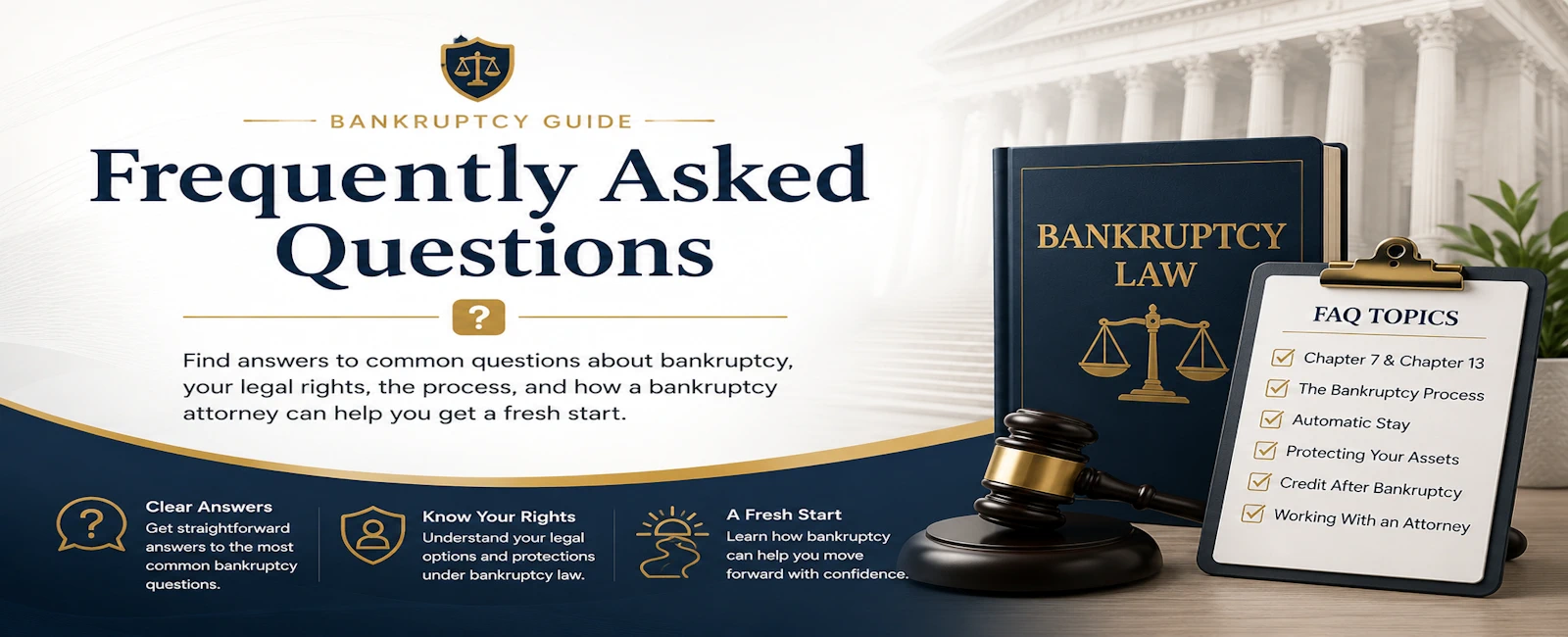
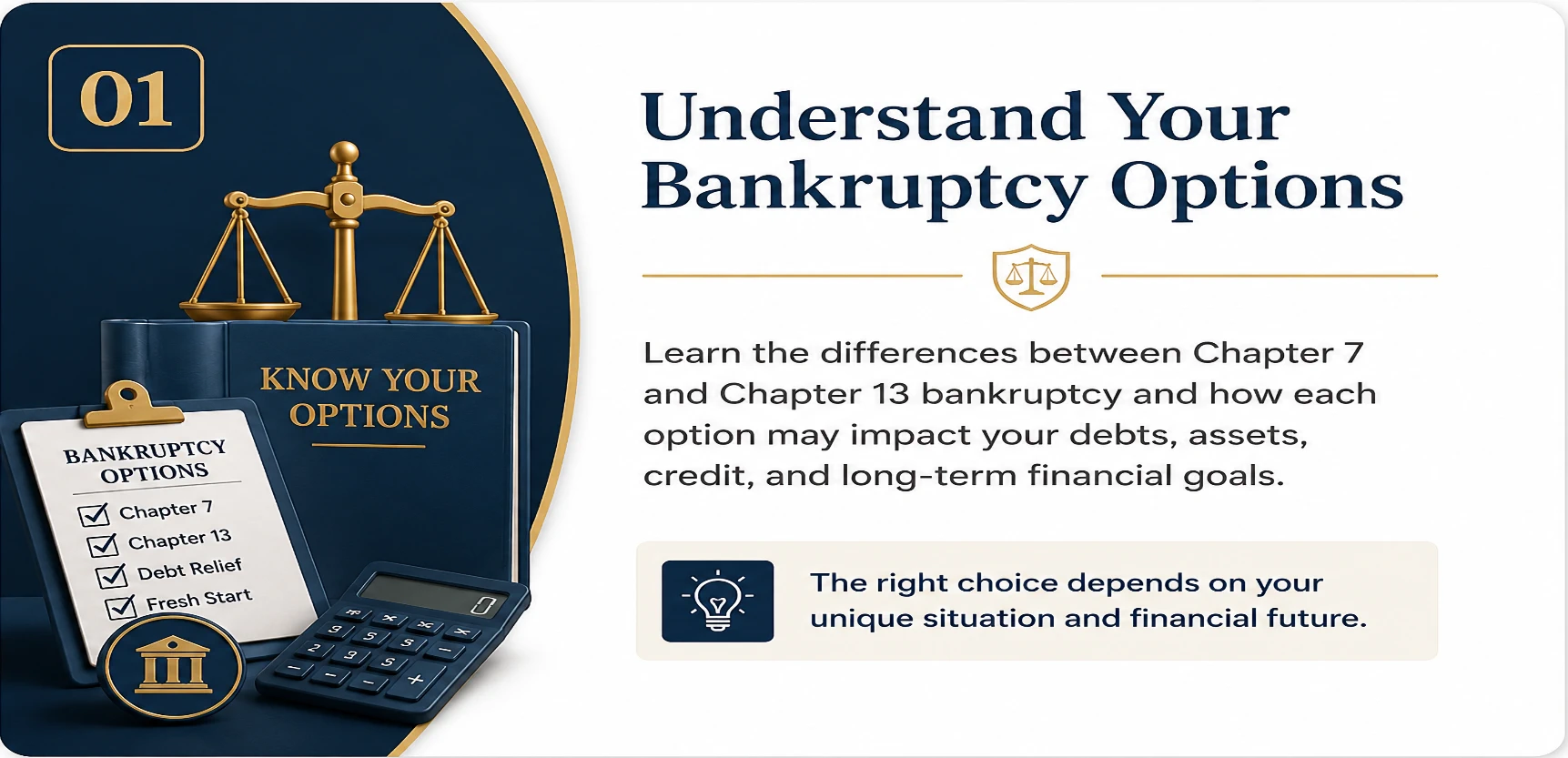
What is the difference between Chapter 7 and Chapter 13 bankruptcy?
Chapter 7 bankruptcy generally involves eliminating qualifying unsecured debts through a liquidation process, while Chapter 13 bankruptcy allows individuals with regular income to repay all or part of their debts through a court-approved repayment plan. An attorney can help determine which option, if any, may be appropriate for your situation.
Will bankruptcy eliminate all of my debts?
Not always. While bankruptcy may discharge many unsecured debts such as credit card balances and medical bills, some obligations—including certain taxes, child support, alimony, and many student loans—may not be discharged. Every case is different, so it's important to discuss your specific debts with an attorney.
Will I lose my home or my car if I file bankruptcy?
Not necessarily. Federal and state exemption laws may allow you to protect certain property, including your home, vehicle, and personal belongings. Whether you can keep specific assets depends on factors such as equity, the type of bankruptcy filed, and applicable state law.
How long will bankruptcy remain on my credit report?
A Chapter 7 bankruptcy generally remains on your credit report for up to ten years, while a Chapter 13 bankruptcy typically remains for up to seven years. Although bankruptcy affects your credit, many people begin rebuilding their credit well before those reporting periods expire.
Can I rebuild my credit after bankruptcy?
Yes. Many people begin rebuilding their credit by making timely payments, using credit responsibly, monitoring their credit reports, and maintaining realistic budgets. Financial recovery is often a gradual process, but responsible financial habits can help improve your credit over time.
Will everyone know that I filed bankruptcy?
Bankruptcy filings are generally public court records. However, most people are unlikely to search for or discover your filing unless they have a specific reason to do so. For many individuals, the practical impact on daily life is less noticeable than they initially expect.
Do I need an attorney to file bankruptcy?
Although individuals may represent themselves, bankruptcy laws and court procedures can be complex. A bankruptcy attorney can help you understand your options, prepare the required documents, identify available exemptions, and avoid costly mistakes.
Can I choose which debts to include in bankruptcy?
No. In most cases, you must disclose all of your assets, income, expenses, and debts when filing bankruptcy. The court determines how eligible debts are handled under the Bankruptcy Code, and intentionally omitting debts or assets can create serious legal problems.
What should I do before meeting with a bankruptcy attorney?
Gather recent financial documents such as pay stubs, tax returns, bank statements, credit card statements, loan information, monthly bills, and a list of your assets and debts. Having this information available can help your attorney evaluate your financial situation and discuss potential options.
How do I choose the right bankruptcy attorney?
Look for an attorney who regularly practices bankruptcy law, clearly explains your options, discusses both the advantages and potential consequences of filing, answers your questions thoroughly, and helps you understand what to expect throughout the process.
FAQ Closing Statement
Bankruptcy laws are complex, and every financial situation is unique. These frequently asked questions provide general educational information and are not intended as legal advice. If you're considering bankruptcy or debt relief, consult a qualified bankruptcy attorney to discuss your individual circumstances and available legal options.
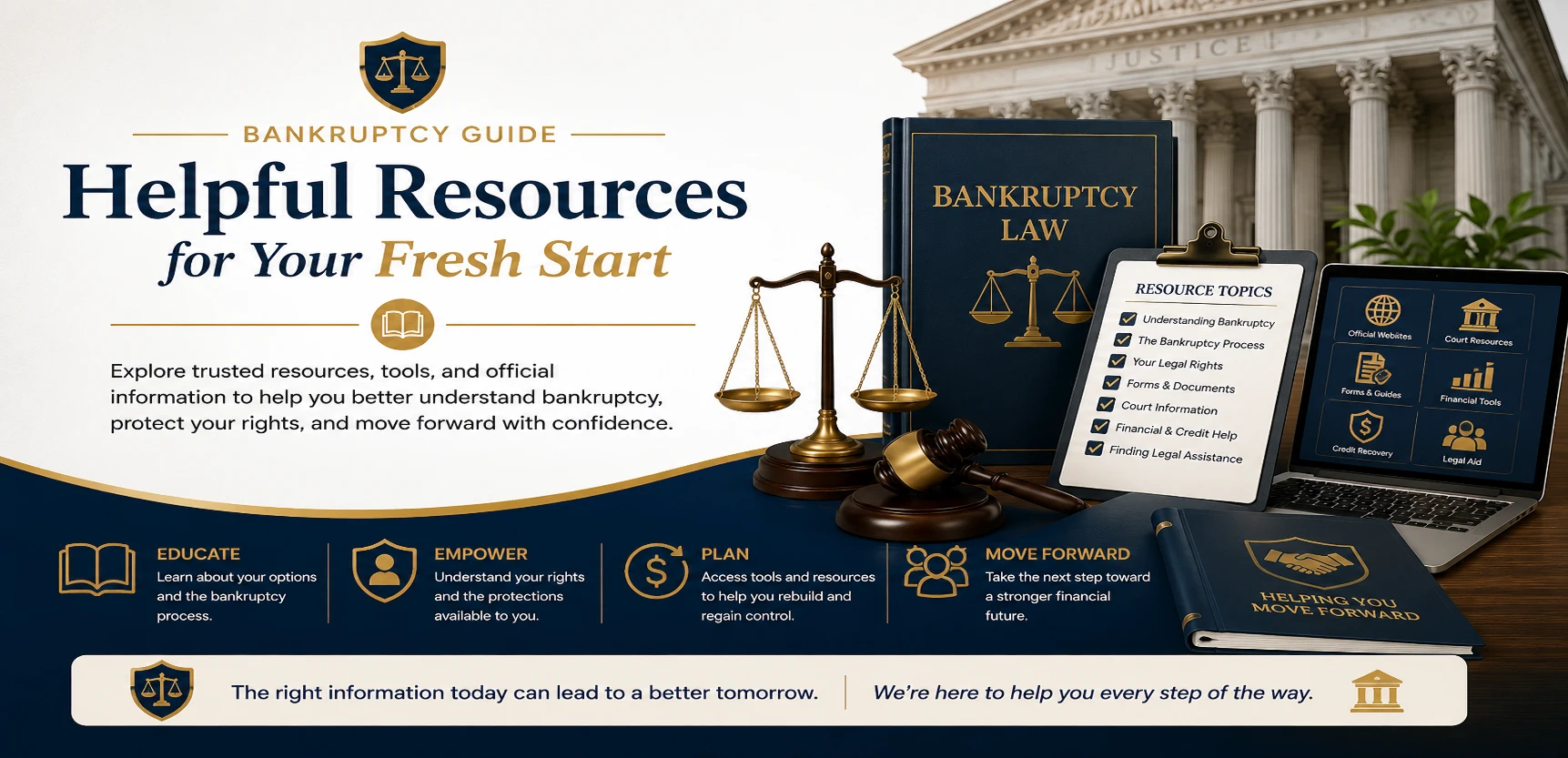
Before deciding whether bankruptcy is the right option for your situation, it can be helpful to review information provided by official government agencies and other trusted organizations. The following resources offer educational information about bankruptcy, debt relief, credit recovery, financial planning, and related topics.
United States Courts – Bankruptcy Basics Resource
Learn the fundamentals of Chapter 7 and Chapter 13 bankruptcy, how the bankruptcy process works, and what to expect when filing for bankruptcy.
U.S. Trustee Program
Explore official information about bankruptcy laws, debtor responsibilities, credit counseling requirements, and bankruptcy education programs.
Consumer Financial Protection Bureau (CFPB)
Find educational resources about managing debt, rebuilding credit, avoiding financial scams, and making informed financial decisions after bankruptcy.
Legal Services Corporation (LSC)
Locate free or low-cost legal assistance and learn about legal aid programs that may be available for individuals facing financial hardship.
AnnualCreditReport.com
Request your free credit reports, review your credit history, monitor your financial progress, and understand how bankruptcy may affect your credit profile.
Still Have Questions?
Find a Bankruptcy Attorney
Every financial situation is unique, and the information provided in this guide is intended for general educational purposes only. If you have questions about Chapter 7 bankruptcy, Chapter 13 bankruptcy, debt relief options, protecting your assets, or whether bankruptcy is the right choice for your circumstances, speaking with an experienced Bankruptcy attorney can help you better understand your legal rights, available options, and the next steps that may be appropriate for your financial future.