

Who this guide is for:
Family law matters often involve some of life's most personal and important decisions. Whether you are considering divorce, establishing child custody arrangements, seeking child or spousal support, adopting a child, or resolving another family-related legal issue, understanding your rights and options before meeting with an attorney can help you make more informed decisions.
This guide is designed to help you prepare for your initial consultation by providing important questions to ask, explaining common legal concepts, and introducing trusted resources related to family law. By becoming familiar with the legal process ahead of time, you'll be better equipped to evaluate your options, communicate your goals, and choose an attorney who is well-suited to your family's unique circumstances.




Key Questions to Ask a Family Law Attorney
Choosing the right attorney begins with asking the right questions. This guide is designed to help you prepare for your consultation by identifying important topics to discuss, understanding your legal options, and comparing attorneys with confidence. While every case is unique, these questions can help you make a more informed decision before selecting legal representation.
How much experience do you have handling family law cases like mine?
Ask whether the attorney regularly handles matters involving divorce, child custody, support, adoption, or other issues similar to your situation.
How familiar are you with the local family court system?
Attorneys familiar with local judges, procedures, and court expectations may better understand how cases are typically handled in your area.
What approach do you typically take toward resolving family law disputes?
Some attorneys prioritize negotiation and mediation, while others may be more litigation-focused. Understanding their approach can help determine whether it aligns with your goals.
Will you personally handle my case?
Clarify whether the attorney you meet with will manage your case directly or whether much of the work will be delegated to associates or support staff.
How are your legal fees structured?
Ask:
- Do you charge hourly rates, flat fees, or retainers?
- What is the initial retainer amount?
- How are unused retainer funds handled?

What additional costs may I be responsible for?
Family law cases may involve expenses such as:
- Court filing fees
- Mediation costs
- Expert evaluations
- Custody investigations
- Appraisals
What factors may affect child custody decisions?
Understanding how courts evaluate custody arrangements can help set realistic expectations.
What is the estimated timeline for my case?
The length of a family law matter may depend on:
- Whether the case is contested
- Court scheduling
- Negotiation progress
- Complexity of financial or custody issues
How will communication and case updates be handled?
Ask:
- How often updates will be provided
- Whether communication is by phone, email, or portal
- Who to contact with urgent questions
What documents should I begin gathering?
Important documents may include:
- Financial records
- Tax returns
- Bank statements
- Parenting schedules
- Property information

What are the possible outcomes in my case?
While no attorney can guarantee results, discussing potential scenarios may help you better understand the legal process.
Is mediation or collaborative law an option?
Alternative dispute resolution methods may reduce conflict, legal expenses, and court involvement in some cases.
What should I avoid doing while the case is pending?
Important topics may include:
- Social media activity
- Financial transfers
- Parenting disputes
- Communication with the other party
How are support obligations typically calculated?
Ask about factors affecting:
- Child support
- Spousal support/alimony
- Temporary support arrangements
What happens if court orders are violated?
Understanding enforcement options may be important if custody, visitation, or support orders are not followed.

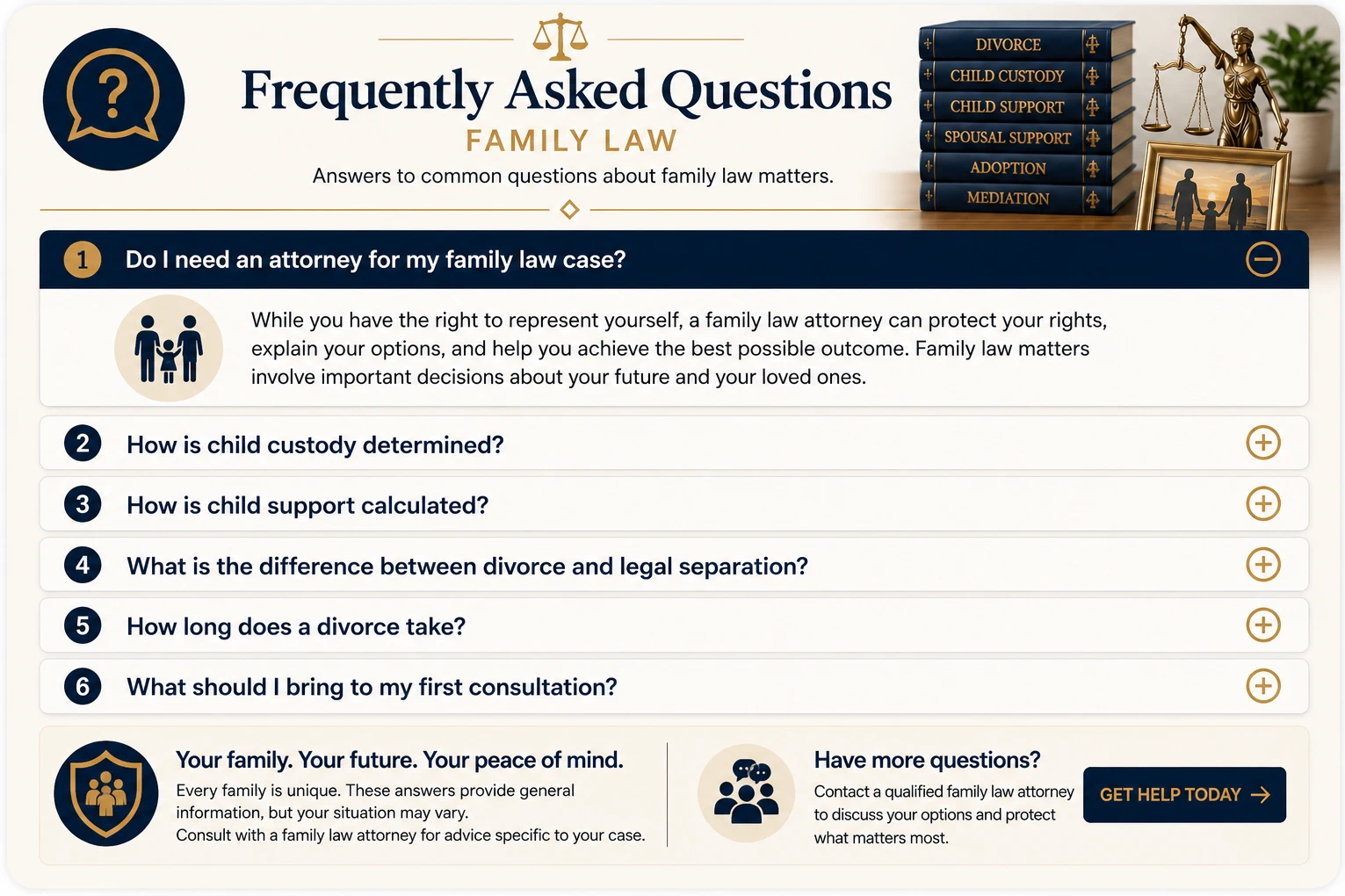
Do I need a family law attorney?
Not every family law matter requires an attorney, but legal guidance can be extremely valuable when your rights, finances, children, or future are involved. An experienced family law attorney can explain your legal options, prepare necessary documents, negotiate on your behalf, and represent you in court if needed. Even if your situation seems straightforward, a consultation can help you avoid costly mistakes and better understand the legal process.
How is child custody determined?
Child custody decisions are based on the best interests of the child. Courts consider many factors, including each parent's ability to provide a stable home, the child's relationship with each parent, educational and emotional needs, and, in some cases, the child's preferences. Custody arrangements vary depending on the unique circumstances of each family.
How is child support calculated?
Child support is generally calculated using state-specific guidelines that consider factors such as each parent's income, the amount of parenting time, childcare expenses, health insurance costs, and other financial considerations. An attorney can help explain how these guidelines apply to your particular situation.
What is the difference between divorce and legal separation?
A divorce legally ends a marriage, while a legal separation allows spouses to live apart and resolve issues such as property division, custody, and support without terminating the marriage. The availability and legal effects of separation vary by state, so it's important to understand your state's laws before making a decision.
What should I bring to my first consultation?
Bring any documents that may help the attorney understand your situation, including marriage certificates, financial records, tax returns, property information, prenuptial agreements, court documents, and any correspondence related to your case. It is also helpful to prepare a list of questions and a timeline of important events.
How long does a family law case take?
The length of a family law case depends on many factors, including the complexity of the issues, whether the parties can reach agreements, court schedules, and state-specific legal procedures. Some matters may be resolved through negotiation or mediation, while others require court hearings that can extend the timeline.
Every family is unique.
These answers provide general educational information and should not be considered legal advice. Every family law matter involves unique circumstances, and the laws governing divorce, child custody, support, adoption, and other family issues vary by state. Consulting with a qualified family law attorney can help you understand your legal rights and options.
Have more questions?
A qualified family law attorney can review your situation, explain the legal process, and help you make informed decisions that protect your family, your future, and your legal interests.
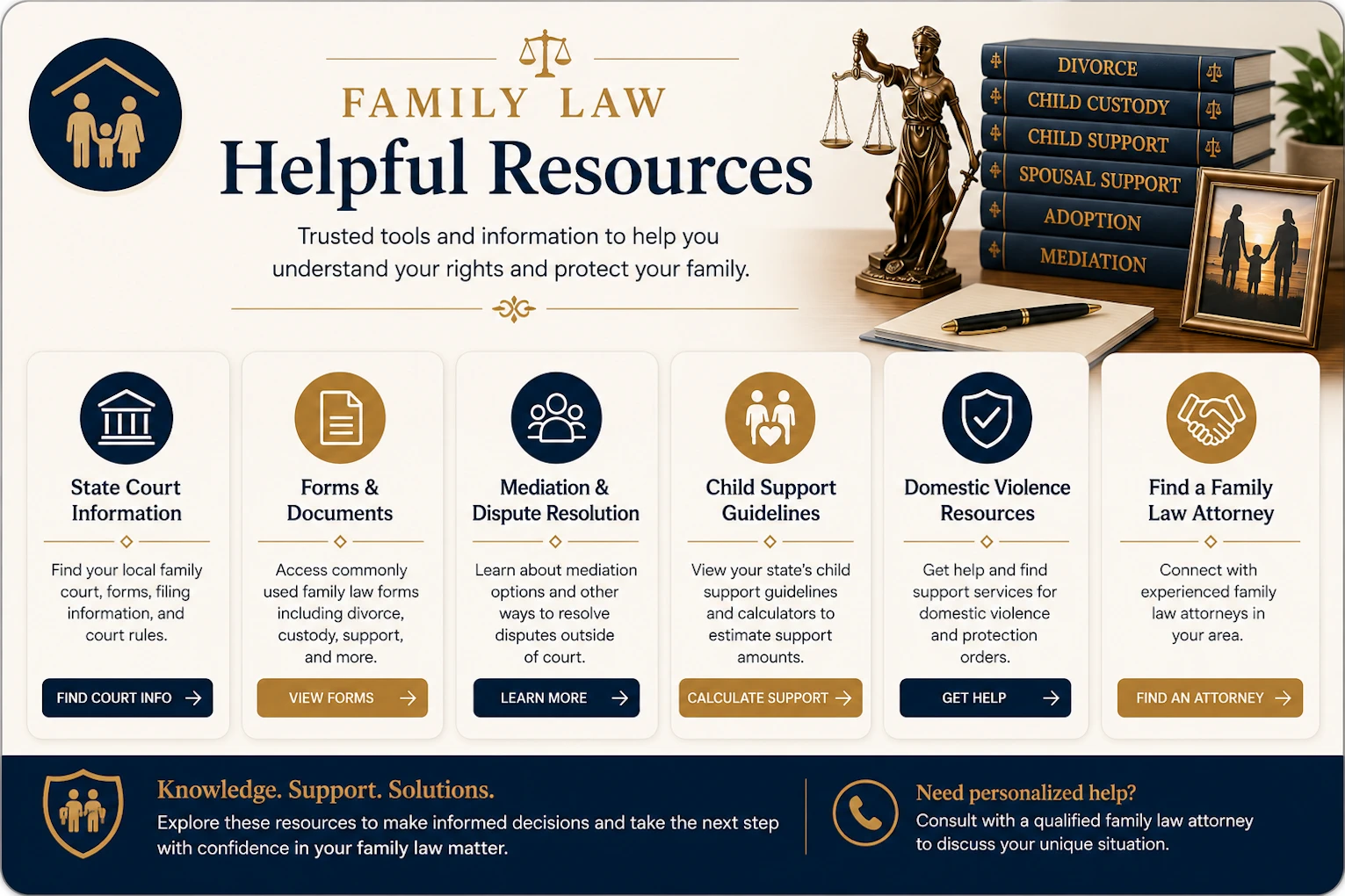
Before making important family law decisions, it can be helpful to review information provided by official government agencies and other trusted organizations. The following resources offer educational information about divorce, child custody, child support, adoption, mediation, family court procedures, and related legal topics to help you better understand your rights, responsibilities, and available options.

Social Security Administration (SSA)
Visit the official Social Security Administration website to access trusted information about Social Security Disability Insurance (SSDI), Supplemental Security Income (SSI), eligibility requirements, benefit applications, appeals, retirement benefits, online services, and other programs administered by the SSA. It is the primary source for accurate, up-to-date information about federal Social Security benefits and services.

Disability Benefits & Applications
Access official information about applying for Social Security Disability benefits, including eligibility requirements, required medical documentation, application procedures, claim status, and supporting evidence. These resources can help you better understand the disability application process and prepare the information needed to submit a complete and accurate claim.

Mediation & Dispute Resolution
Learn how mediation and alternative dispute resolution can help families resolve disagreements involving custody, parenting time, property division, and other issues while reducing conflict and avoiding lengthy court proceedings.

Child Support Guidelines
Review child support guidelines, payment information, calculators, enforcement resources, and educational materials to better understand how child support obligations may be determined in your state.

Domestic Violence Resources
Find information about protective orders, emergency assistance, victim advocacy organizations, shelters, safety planning, and other resources available to individuals and families experiencing domestic violence.
Still Have Questions?
Find a Family Law Attorney
Every family situation is unique, and the information provided in this guide is intended for general educational purposes only. If you have questions about divorce, child custody, child support, adoption, or another family law matter, speaking with an experienced Family Law attorney can help you better understand your legal rights, available options, and the next steps that may be appropriate for your circumstances.