
Who this guide is for:
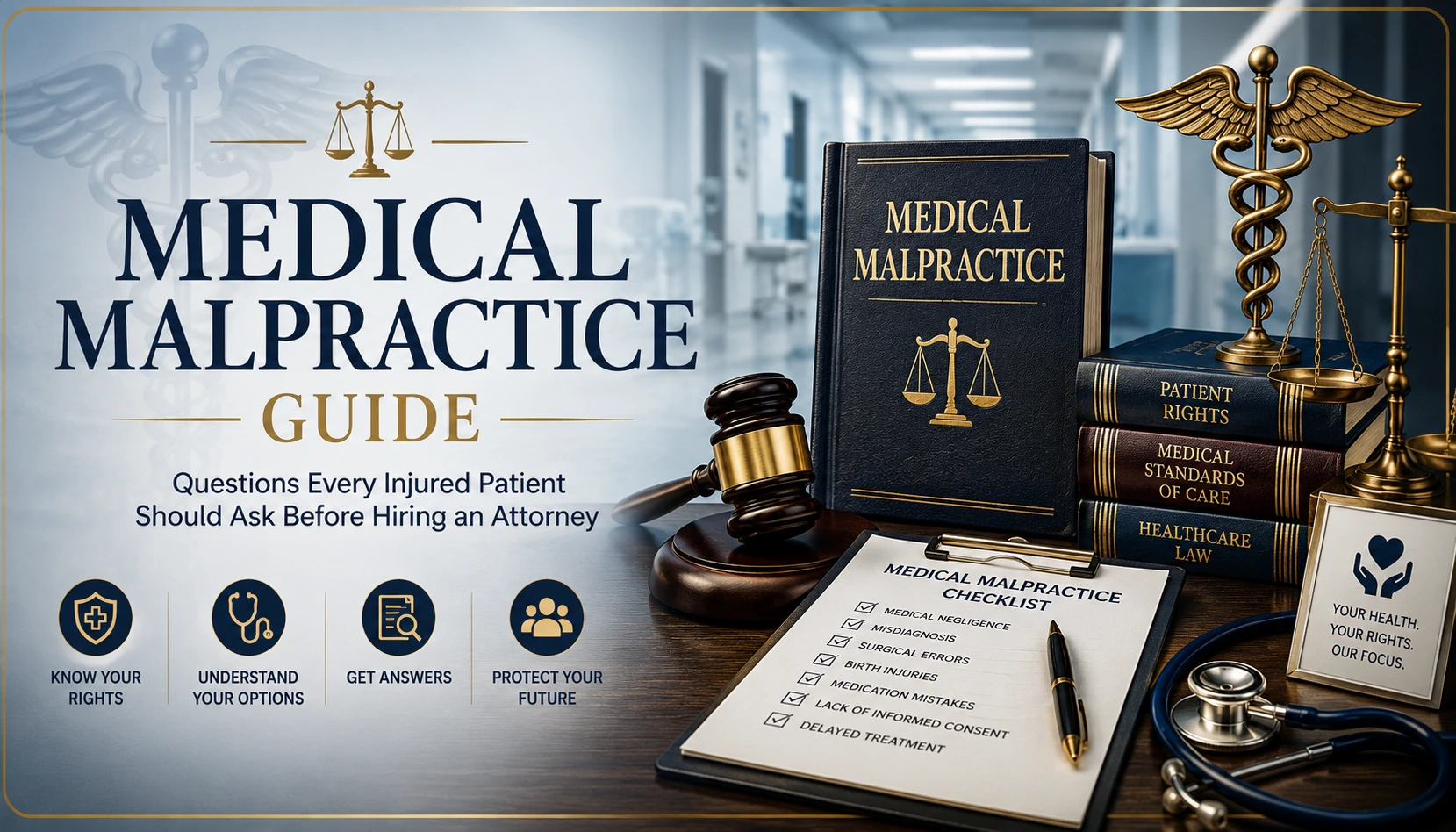
This guide is designed for patients and families who believe they may have been harmed by a medical error, delayed diagnosis, surgical mistake, medication error, birth injury, or another form of possible medical negligence.
Whether you're trying to understand your legal rights, learn how medical malpractice claims work, or prepare for a consultation with an attorney, this guide provides educational information to help you ask informed questions and better understand your available options. It is intended for general educational purposes and should not be considered legal or medical advice.




Key Questions to Ask a Medical Malpractice Attorney
Choosing the right attorney begins with asking the right questions. This guide is designed to help you prepare for your consultation by identifying important topics to discuss, understanding your legal options, and comparing attorneys with confidence. While every case is unique, these questions can help you make a more informed decision before selecting legal representation.
How much experience do you have handling medical malpractice cases?
Ask whether the attorney regularly handles claims involving surgical errors, misdiagnosis, medication mistakes, birth injuries, hospital negligence, or other medical-related cases similar to your situation.
Have you handled cases involving the specific type of injury or treatment involved in my case?
Medical malpractice cases can be highly specialized. Experience with similar medical issues may be important
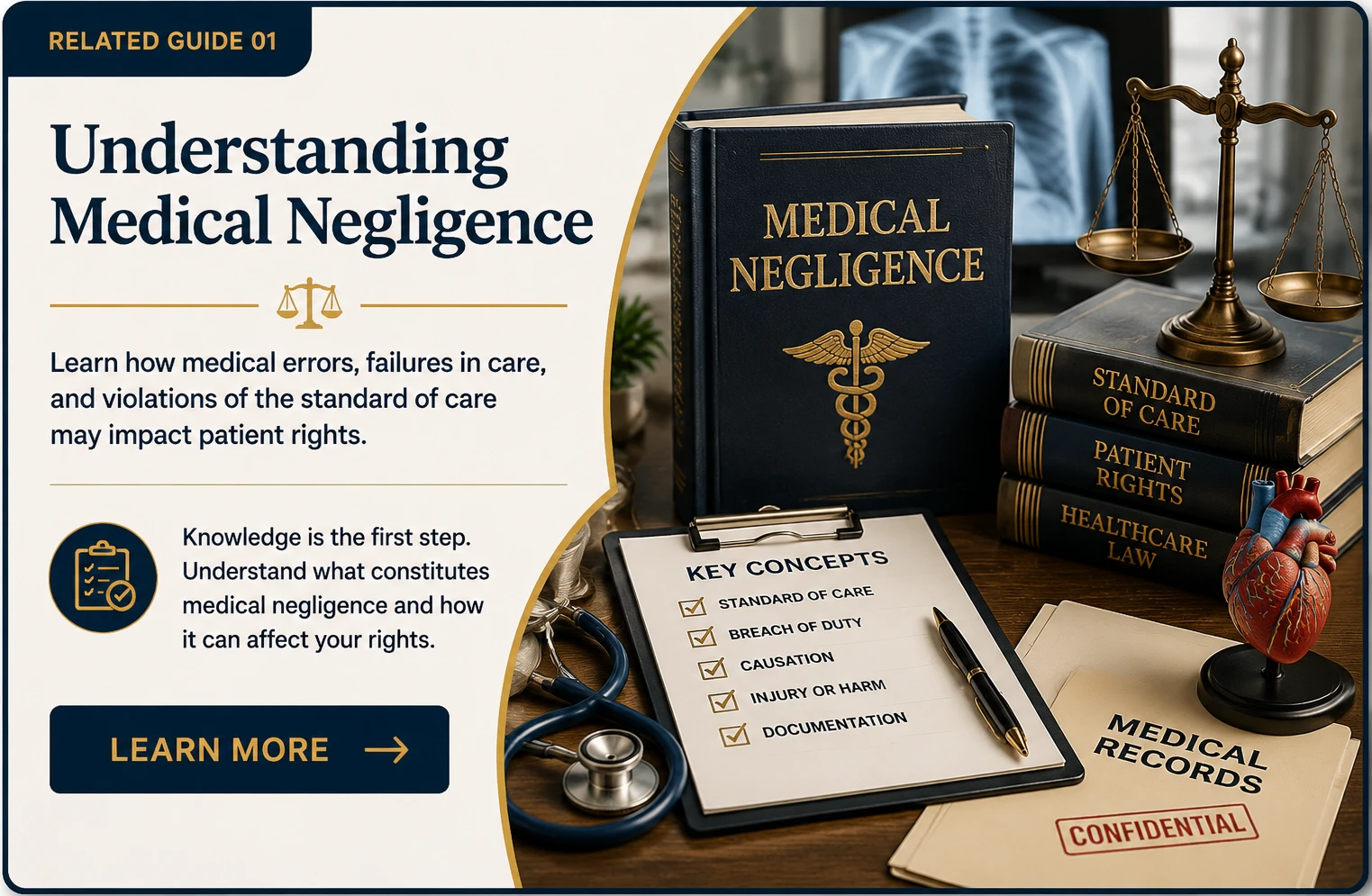
What is required to prove medical malpractice?
Ask about the general elements typically involved, such as:
- Standard of care
- Negligence
- Causation
- Damages
- Expert medical testimony
How are your legal fees structured?
Most medical malpractice attorneys work on a contingency fee basis. Clarify:
- Percentage charged
- Whether fees increase if the case goes to trial
- Additional litigation expenses
What case-related costs may I be responsible for?
Medical malpractice cases often involve substantial expenses, including:
- Medical experts
- Record reviews
- Depositions
- Court filing fees
- Trial preparation costs
How long do medical malpractice cases typically take?
These cases may take significant time due to:
- Medical record analysis
- Expert evaluations
- Settlement negotiations
- Court scheduling
What challenges or weaknesses do you see in my case?
An experienced attorney should discuss potential obstacles honestly rather than making guarantees.
Will you personally handle my case?
Clarify whether the attorney you meet with will manage your case directly or whether much of the work will be handled by associates or support staff.
What compensation may be available in medical malpractice cases?
Potential damages may include:
- Medical expenses
- Lost income
- Future care costs
- Pain and suffering
- Long-term disability impacts
Have you taken medical malpractice cases to trial?
Some malpractice claims require litigation if settlement negotiations fail. Trial experience may be important.
What medical records or documentation should I gather?
Important documents may include:
- Treatment records
- Prescriptions
- Test results
- Billing statements
- Insurance correspondence
Is there a deadline to file a medical malpractice claim?
Medical malpractice claims are subject to statutes of limitations that vary by state and case type.
What role do expert witnesses play in malpractice cases?
Many states require qualified medical experts to review claims and provide opinions regarding the standard of care.
What should I avoid doing while the case is pending?
Topics may include:
- Social media discussions
- Speaking with insurance representatives
- Signing releases without review
- Delaying medical treatment
What happens if the healthcare provider denies wrongdoing?
Medical malpractice claims are often heavily contested. Ask how disputes over negligence or causation are typically handled during litigation or settlement negotiations.
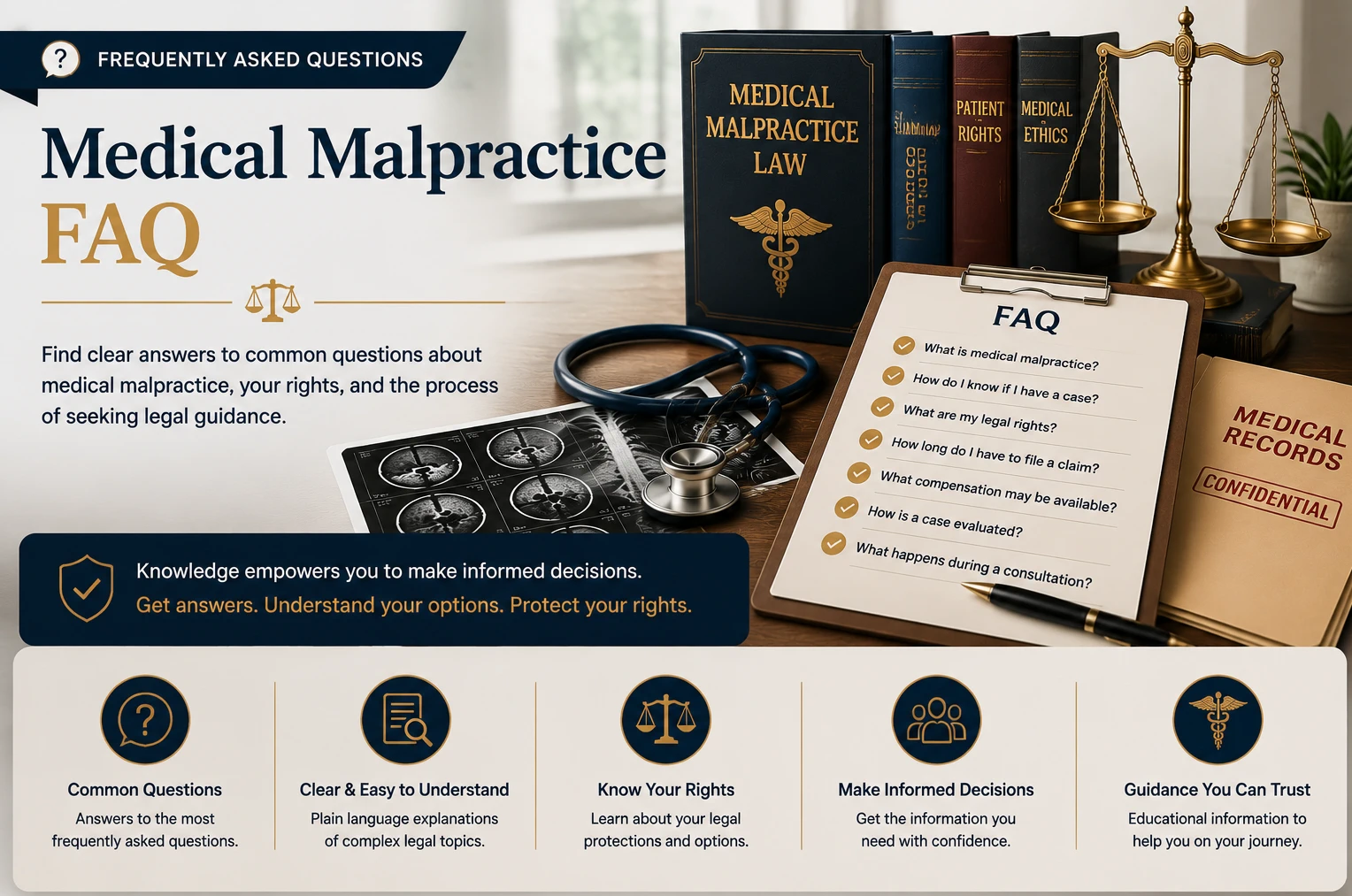
What is medical malpractice?
Medical malpractice occurs when a healthcare provider fails to provide the accepted standard of care and that failure causes harm to a patient. A medical malpractice claim generally involves showing that a provider had a duty to provide appropriate care, that the standard of care was not met, and that the patient suffered an injury as a result.
Not every unexpected medical outcome or complication is considered malpractice. Medical treatment can involve risks, and determining whether negligence occurred often requires reviewing medical records and obtaining professional medical opinions.
What are common examples of medical malpractice?
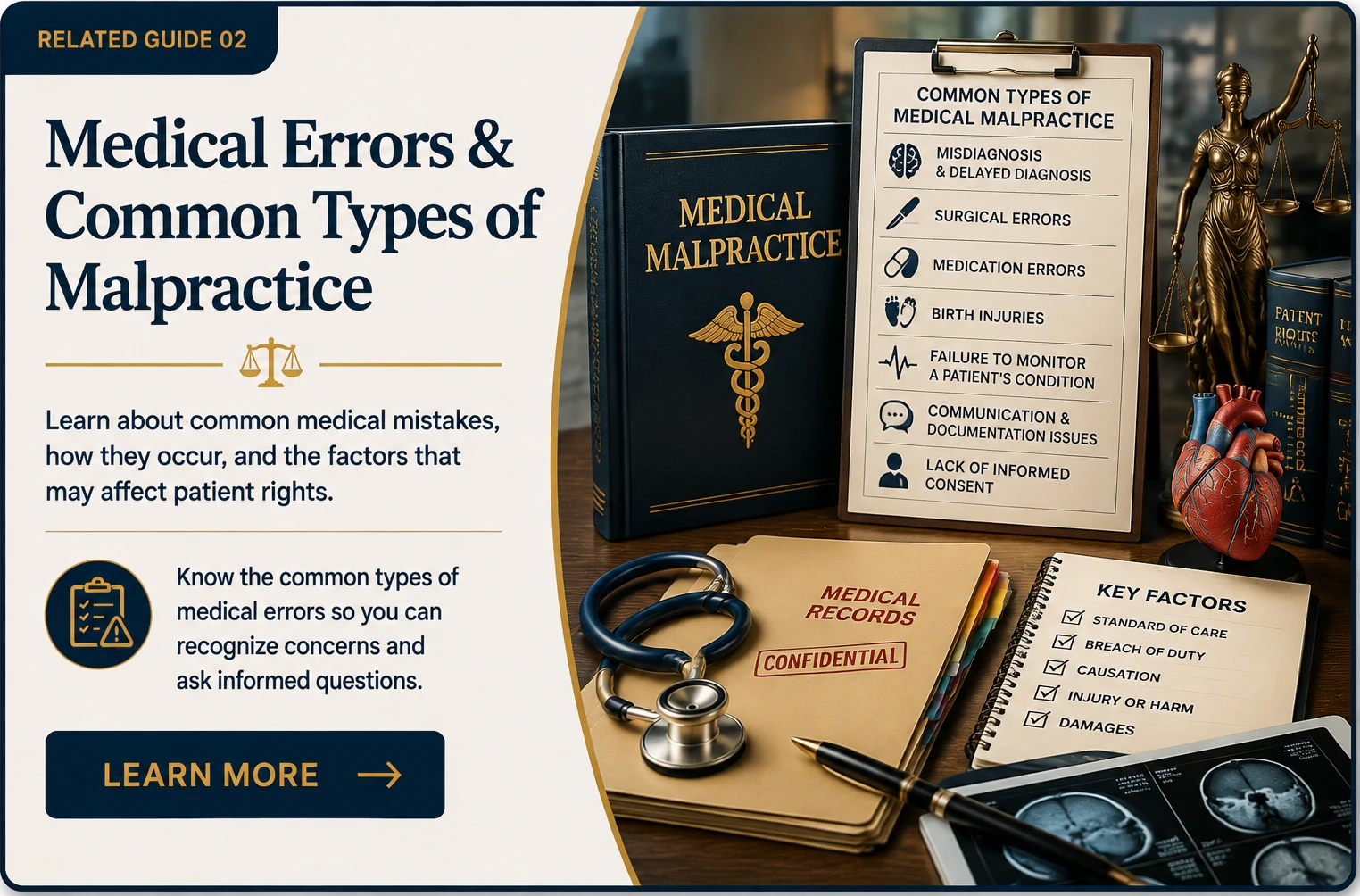
Medical malpractice can involve many different situations, including:
- Misdiagnosis or delayed diagnosis
- Surgical errors
- Medication errors
- Birth injuries
- Failure to monitor a patient's condition
- Improper treatment decisions
- Failure to obtain informed consent
- Errors involving anesthesia
- Communication failures that affect patient care
Each situation depends on the specific facts, medical history, and applicable standard of care.
How do I know if I may have a medical malpractice case?
Determining whether medical malpractice may have occurred requires reviewing the details of the medical care provided, the patient's injuries, and whether the healthcare provider's actions met accepted medical standards.
Important factors may include:
- The patient's medical records
- Treatment decisions made by healthcare providers
- The timeline of events
- Expert medical review
- The relationship between the medical care provided and the resulting harm
An experienced Medical Malpractice attorney can help evaluate whether the circumstances may support a potential claim.
Is every medical mistake considered malpractice? Answer:
No. A medical mistake, complication, or unsuccessful treatment does not automatically mean malpractice occurred.
Healthcare providers may make reasonable decisions based on the information available at the time, and some medical procedures involve known risks. Medical malpractice generally involves a failure to meet the accepted standard of care that results in patient harm.
Why are medical records important in a malpractice claim?
Medical records are often one of the most important sources of information when evaluating a possible medical malpractice claim.
Records may help show:
- The patient's condition before treatment
- Diagnoses and medical decisions
- Medications and procedures provided
- Communication between healthcare providers
- Changes in the patient's condition
- Follow-up care and outcomes
A complete review of medical documentation can help determine what occurred and whether the standard of care may have been met.
What is the "standard of care" in medical malpractice?
The standard of care refers to the level and type of care that a reasonably skilled healthcare provider would be expected to provide under similar circumstances.
Medical malpractice cases often focus on whether the healthcare provider's actions were consistent with accepted medical practices based on the patient's condition, available information, and circumstances at the time.
Do medical malpractice cases require expert witnesses?
Many medical malpractice cases require review by medical professionals who can evaluate whether the care provided met the appropriate standard of care.
Medical experts may help explain:
- What care should have been provided
- Whether accepted medical practices were followed
- Whether a medical error contributed to the patient's injury
Requirements vary depending on the location and circumstances of the claim.
How long do I have to file a medical malpractice claim?
The time limit for filing a medical malpractice claim is called the statute of limitations. These deadlines vary by state and may depend on factors such as when the injury occurred, when it was discovered, and the circumstances involved.
Because missing a filing deadline may affect legal rights, individuals with concerns about possible malpractice should consider learning about the applicable requirements as soon as possible.
What types of compensation may be available in a medical malpractice claim?
Depending on the circumstances, compensation in a medical malpractice claim may involve damages related to:
- Medical expenses
- Future medical care
- Lost income or reduced earning ability
- Physical pain and suffering
- Emotional impact
- Long-term disability or life changes
The types of compensation available depend on state laws, the facts of the case, and the extent of the injuries.
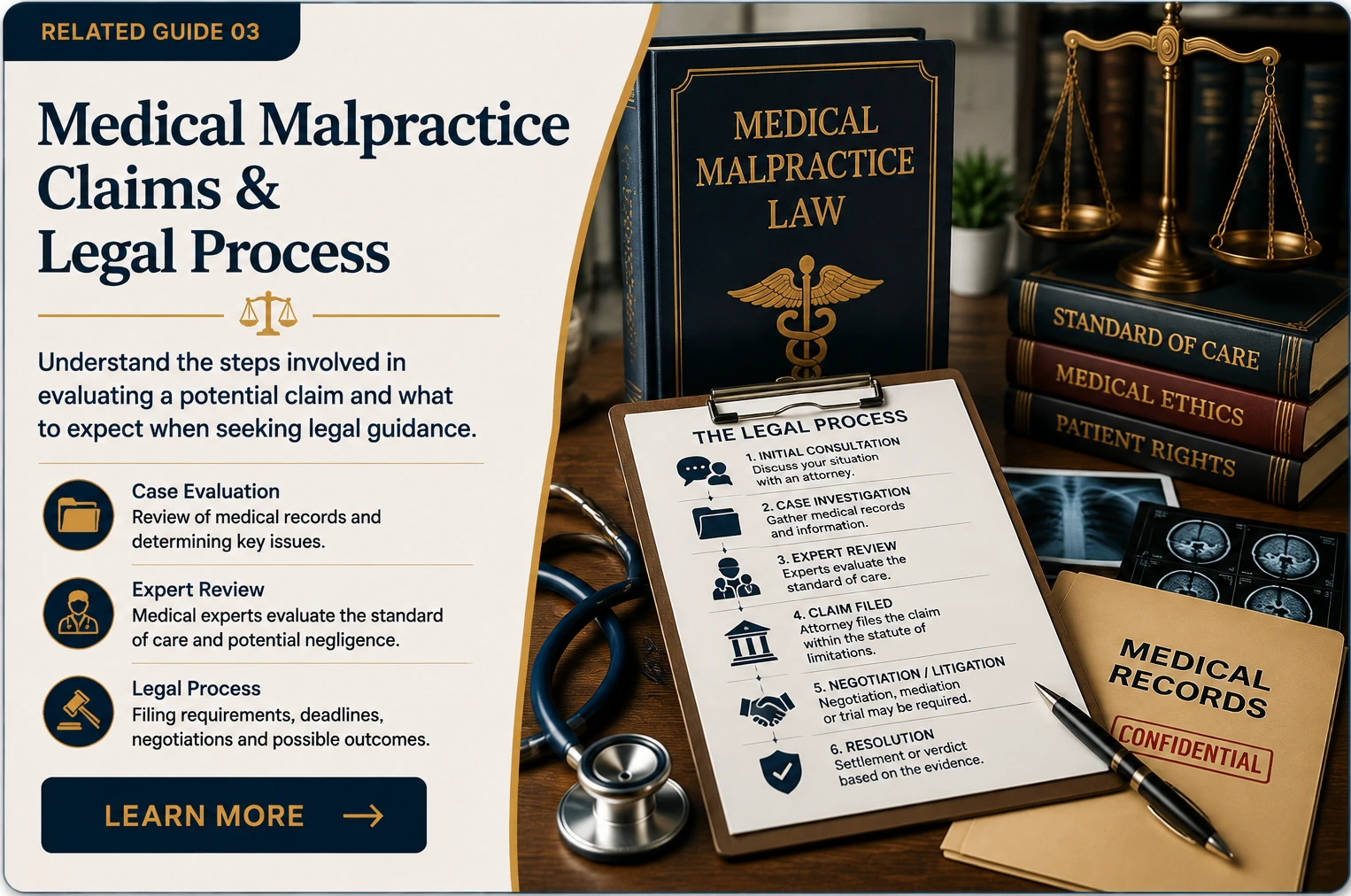
How do medical malpractice attorneys evaluate a potential case?
A Medical Malpractice attorney may review several factors when evaluating a potential claim, including:
- Medical records
- Treatment history
- The nature of the injury
- Expert medical opinions
- Applicable laws and deadlines
- Whether the evidence supports a connection between the care provided and the harm experienced
The purpose of an evaluation is to help determine whether pursuing a claim may be appropriate.
What should I bring to a consultation with a medical malpractice attorney?
Helpful information for an initial consultation may include:
- Medical records and bills
- Names of healthcare providers involved
- Dates of appointments, procedures, and treatments
- A timeline of events
- Insurance information
- Questions or concerns about the care received
Organizing this information can help make the consultation more productive.
Can I handle a medical malpractice claim without an attorney?
Some people choose to research their options independently; however, medical malpractice claims can involve complex medical information, expert review requirements, legal deadlines, and detailed procedures.
A qualified Medical Malpractice attorney can help explain the process, evaluate available evidence, and provide guidance based on the specific circumstances of a situation.
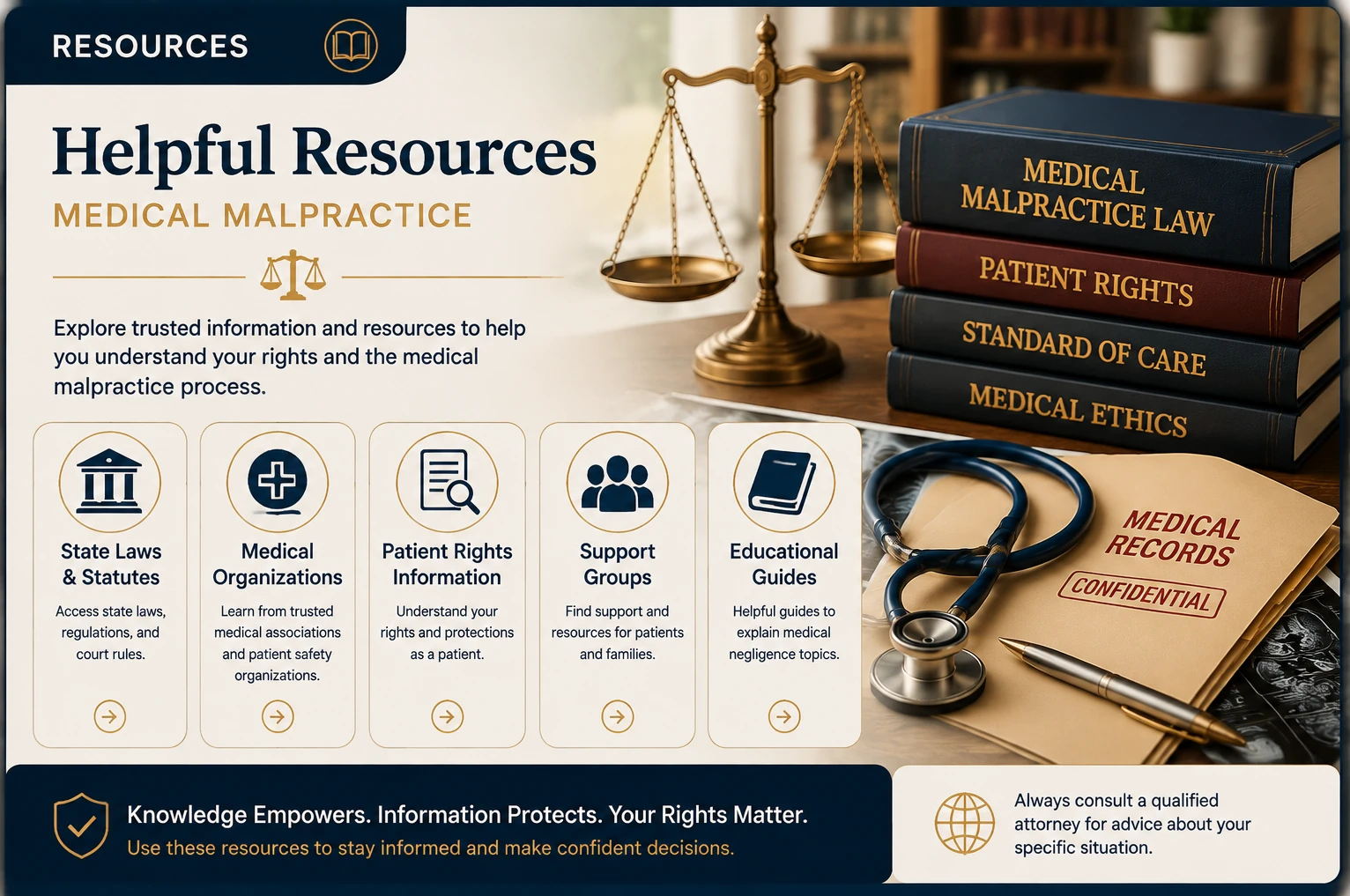
Understanding your rights after a medical injury begins with access to accurate and trustworthy information.
The resources below include government agencies, medical organizations, patient advocacy groups, educational materials, and legal references that can help you better understand medical malpractice, patient rights, standards of care, and the options available if you believe medical negligence may have occurred.
Whether you are researching a potential claim, gathering information for a consultation, or simply learning about your legal rights, these resources provide a valuable starting point for making informed decisions.

Government Health & Legal Agencies
Learn about patient protections, healthcare regulations, and medical standards from trusted federal and state agencies. These organizations provide valuable information about patient safety, healthcare oversight, quality of care, and reporting concerns involving healthcare providers.

Medical Licensing & Professional Boards
State medical boards and professional licensing agencies oversee physician licensing, professional conduct, and disciplinary actions. These resources can help you learn more about healthcare provider credentials, licensing requirements, and professional standards.

Patient Rights & Healthcare Advocacy
Patient advocacy organizations provide educational materials explaining patient rights, informed consent, healthcare decision-making, medical privacy, and navigating the healthcare system. These resources help patients better understand their protections and responsibilities.

Legal Aid & Patient Assistance
Nonprofit legal aid organizations and patient assistance programs may provide educational information, referrals, and support for individuals seeking to understand their legal rights after a serious medical injury. Availability and services vary depending on your location and circumstances.

Medical Malpractice Education
Explore trusted educational resources that explain medical negligence, standards of care, medical records, expert review, common malpractice situations, and the legal process. These guides can help patients and families make informed decisions before seeking legal advice.

Find a Medical Malpractice Attorney
Locate experienced Medical Malpractice attorneys who can evaluate potential claims involving medical negligence, surgical errors, delayed diagnosis, medication mistakes, birth injuries, hospital negligence, and other healthcare-related concerns. An experienced attorney can help explain your legal rights and discuss the options available based on your individual circumstances.
Still Have Questions?
Find a Medical Malpractice Attorney
Every medical situation is unique, and determining whether a healthcare provider's actions may have resulted in medical malpractice often requires a careful review of the medical records and the applicable standard of care.
If you have questions about a possible medical error, delayed diagnosis, surgical complication, medication mistake, birth injury, or another healthcare-related concern, speaking with an experienced Medical Malpractice attorney can help you better understand your legal rights, the strength of a potential claim, and the options that may be available based on your specific circumstances.