

Who this guide is for:
Applying for Social Security Disability benefits can be a complex and often overwhelming process. Whether you are filing your first application, appealing a denied claim, or helping a family member navigate the disability benefits system, understanding the process before speaking with an attorney can help you make informed decisions and avoid common mistakes.
This guide is designed to help you prepare for your initial consultation by providing important questions to ask, explaining key aspects of the disability claims process, and introducing trusted resources related to Social Security Disability benefits. By learning about eligibility requirements, medical evidence, appeals, and legal representation before your consultation, you'll be better prepared to discuss your situation, understand your options, and choose an attorney who can effectively represent your interests.




Key Questions to Ask a Social Security Disability Attorney
Choosing the right attorney begins with asking the right questions. This guide is designed to help you prepare for your consultation by identifying important topics to discuss, understanding your legal options, and comparing attorneys with confidence. While every case is unique, these questions can help you make a more informed decision before selecting legal representation.
How much experience do you have handling Social Security Disability cases?
Ask whether the attorney regularly handles:
- Social Security Disability Insurance (SSDI)
- Supplemental Security Income (SSI)
- Appeals and disability hearings
Have you handled cases involving my specific medical condition?
Experience with conditions similar to yours may help the attorney better understand medical documentation and disability requirements.
What is the difference between SSDI and SSI?
Ask how eligibility requirements differ regarding:
- Work history
- Income limits
- Assets
- Medical disability standards
How are your legal fees structured?
Social Security Disability attorney fees are often regulated. Clarify:
- Fee percentages
- Fee caps
- Case expenses
- Whether fees require approval
What medical records or documentation should I gather?
Important documents may include:
- Medical records
- Physician statements
- Treatment history
- Prescription records
- Work history information
- Test results
What are the most common reasons disability claims are denied?
Understanding common issues may help avoid mistakes involving:
- Insufficient medical evidence
- Incomplete applications
- Missed deadlines
- Failure to follow treatment
What happens if my disability application is denied?
Ask about the appeals process, including:
- Reconsideration
- Administrative hearings
- Appeals Council review
- Federal court review
How long does the disability process usually take?
Timelines may vary depending on:
- Initial application review
- Appeal backlog
- Hearing scheduling
- Medical evaluations
Will you personally handle my case and attend hearings?
Clarify whether the attorney you meet with will represent you directly throughout the process.
How should I prepare for a disability hearing?
Ask about:
- Common hearing questions
- Medical evidence preparation
- Testimony expectations
- Vocational expert involvement
What should I avoid doing while my claim is pending?
Important issues may include:
- Missing medical appointments
- Inconsistent treatment
- Working beyond allowed limits
- Posting misleading information on social media
Can I continue working while applying for disability benefits?
Ask how work activity and income levels may affect eligibility or ongoing benefits.
What benefits may be available if my claim is approved?
Potential benefits may include:
- Monthly disability payments
- Back pay
- Medicare or Medicaid eligibility
- Dependent benefits in some situations
What happens if Social Security requests additional examinations?
Applicants may be required to attend consultative medical exams during the evaluation process.
How will communication and case updates be handled?
Ask:
- How often updates will be provided
- Preferred communication methods
- Who to contact with questions
- Expected response times

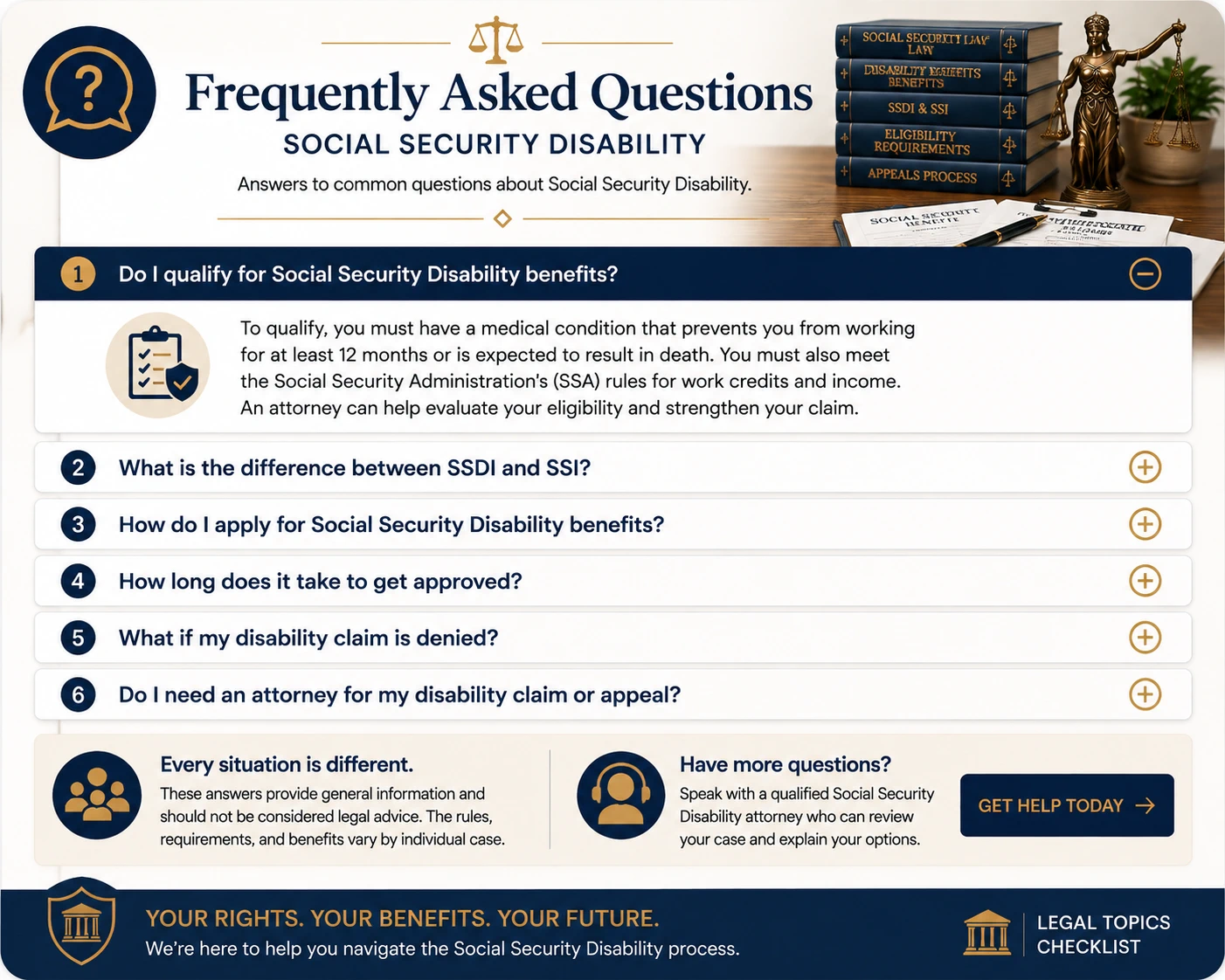
Do I qualify for Social Security Disability benefits?
To qualify for Social Security Disability benefits, you generally must have a medical condition that prevents you from performing substantial work and is expected to last at least 12 months or result in death. Depending on the program, you may also need sufficient work credits (for SSDI) or meet financial eligibility requirements (for SSI). An attorney can help evaluate your eligibility and explain which program may apply to your situation.
What is the difference between SSDI and SSI?
Social Security Disability Insurance (SSDI) is based primarily on your work history and the Social Security taxes you've paid. Supplemental Security Income (SSI) is a needs-based program for individuals with limited income and resources. Some people may qualify for one program, while others may qualify for both.
How do I apply for Social Security Disability benefits?
You can apply online, by telephone, or at your local Social Security office. The application typically requires detailed information about your medical conditions, work history, healthcare providers, medications, and daily limitations. Providing complete and accurate information can help avoid unnecessary delays.
How long does it take to receive a decision?
Processing times vary depending on the complexity of your claim, the availability of medical records, and the workload of the Social Security Administration. Initial decisions may take several months, and appeals generally require additional time. An attorney can help ensure your claim is properly documented throughout the process.
What happens if my disability claim is denied?
A denial does not necessarily mean you are ineligible for benefits. Many claims are approved during the appeals process. Depending on your circumstances, you may request reconsideration, a hearing before an Administrative Law Judge, review by the Appeals Council, or federal court review. Understanding the applicable deadlines is essential.
Should I hire a Social Security Disability attorney?
While you are not required to have an attorney, legal representation can be especially helpful if your claim has been denied, involves complex medical evidence, or requires an appeal. An experienced Social Security Disability attorney can help gather evidence, prepare your case, meet filing deadlines, and represent you throughout the appeals process.
Every disability claim is unique.
These answers provide general educational information and should not be considered legal advice. Eligibility requirements, medical evidence, work history, and financial circumstances differ from one individual to another. Consulting with a qualified Social Security Disability attorney can help you better understand your rights, available benefits, and the claims process.
Have more questions?
A qualified Social Security Disability attorney can review your medical and employment history, explain your legal options, assist with applications and appeals, and help you pursue the benefits you may be entitled to receive.
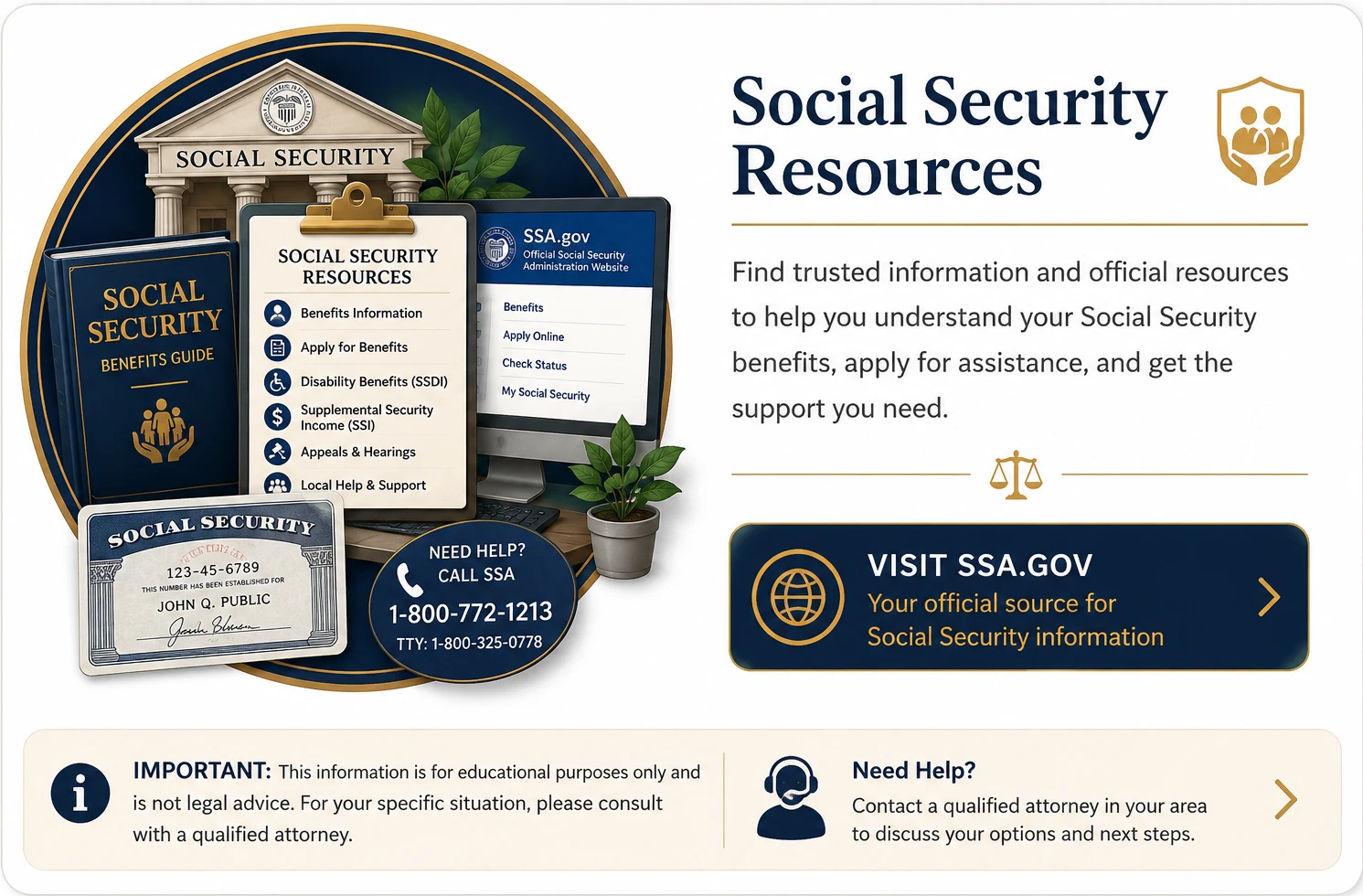
Before applying for Social Security Disability benefits or appealing a denied claim, it can be helpful to review information provided by the Social Security Administration and other trusted organizations. The following resources offer educational information about Social Security Disability Insurance (SSDI), Supplemental Security Income (SSI), disability eligibility, applications, appeals, benefit programs, and related topics to help you better understand the claims process and your available options.

Social Security Administration (SSA)
Visit the official Social Security Administration website to learn about Social Security Disability Insurance (SSDI), Supplemental Security Income (SSI), eligibility requirements, benefit applications, appeals, and other disability-related services.

Disability Benefits & Applications
Access official information about applying for Social Security Disability benefits, required documentation, medical evidence, application status, and the disability determination process.

Medicare & Medicaid Information
Learn how Medicare and Medicaid may relate to Social Security Disability benefits, including eligibility, healthcare coverage, enrollment requirements, and available medical assistance programs.

Disability Appeals Process
Review official information about the Social Security Disability appeals process, including reconsideration requests, Administrative Law Judge hearings, Appeals Council reviews, federal court appeals, and important filing deadlines. These resources can help you better understand each stage of the appeals process and the steps available if your disability claim has been denied.
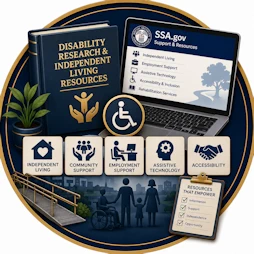
Disability Research & Independent Living
Explore trusted resources that provide information about independent living, rehabilitation services, assistive technology, accessibility, employment support, and community programs for individuals with disabilities. These resources can help you better understand the services and opportunities available to promote greater independence, improve quality of life, and support long-term success at home, in the workplace, and within your community.

Find a Social Security Disability Attorney
Locate experienced Social Security Disability attorneys who can assist with SSDI and SSI applications, appeals, hearings, medical evidence, and representation throughout the disability claims process.
Still Have Questions?
Find a Social Security Disability Attorney
Every disability claim is unique, and the information provided in this guide is intended for general educational purposes only. If you have questions about eligibility, applying for benefits, or appealing a denied claim, speaking with an experienced Social Security Disability attorney can help you better understand your legal options and navigate the disability claims process.