Who this guide is for:
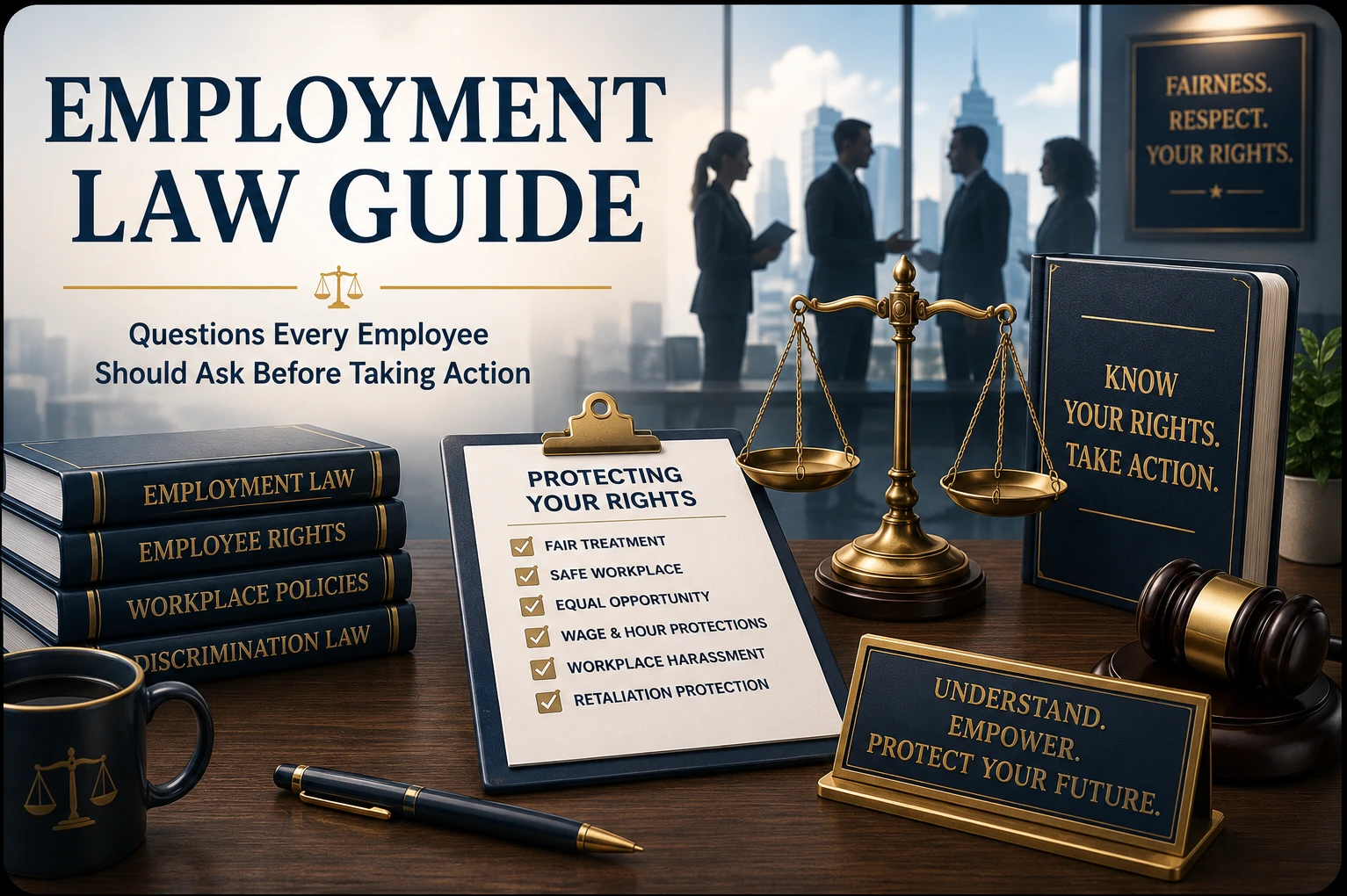
Workplace issues can affect your career, financial security, and overall well-being. Whether you have questions about hiring practices, workplace discrimination, harassment, wrongful termination, wage and hour laws, retaliation, family or medical leave, workplace accommodations, or employment contracts, understanding your legal rights can help you make informed decisions before taking action.
This guide is designed for employees, job applicants, former employees, supervisors, and anyone seeking a better understanding of common Employment Law issues before consulting with an attorney. The checklist provides educational questions to help you prepare for discussions about workplace rights, employer responsibilities, employment disputes, labor laws, and other legal matters that may affect your job or career.
While this guide is not a substitute for legal advice, it can help you organize your concerns, identify important topics to discuss, and make the most of your consultation with a qualified Employment Law attorney.


Key Questions to Ask an Employment Law Attorney
Choosing the right attorney begins with asking the right questions. This guide is designed to help you prepare for your consultation by identifying important topics to discuss, understanding your legal options, and comparing attorneys with confidence. While every case is unique, these questions can help you make a more informed decision before selecting legal representation.
How much experience do you have handling employment law cases like mine?
Ask whether the attorney regularly handles matters involving wrongful termination, discrimination, harassment, retaliation, wage disputes, or employment contracts.
Have you represented employees, employers, or both?
Understanding the attorney’s background may provide insight into their experience with workplace disputes and negotiation strategies.
What laws may apply to my situation?
Employment law matters may involve:
- Federal labor laws
- State employment laws
- Workplace discrimination statutes
- Wage and hour regulations
- Family and medical leave protections
How are your legal fees structured?
Clarify:
- Hourly rates
- Flat fees
- Retainers
- Contingency arrangements (if applicable)
- Additional litigation costs
What documents should I gather before moving forward?
Important documents may include:
- Employment contracts
- Employee handbooks
- Performance reviews
- Emails or text messages
- Pay stubs
- HR complaints
- Termination notices
What are the strengths and weaknesses of my case?
An experienced attorney should discuss potential challenges honestly and explain possible legal outcomes.
What damages or remedies may be available?
Depending on the situation, potential remedies may include:
- Lost wages
- Reinstatement
- Severance negotiations
- Emotional distress damages
- Workplace accommodations
Are there deadlines for filing an employment-related claim?
Employment law claims may involve strict filing deadlines with government agencies or courts.
What happens if my employer retaliates against me?
Ask how retaliation claims may arise after:
- Reporting discrimination
- Filing complaints
- Requesting accommodations
- Participating in investigations
Will you personally handle my case?
Clarify whether the attorney you meet with will manage your case directly or whether work will be delegated to associates or staff.
Is mediation or settlement an option before filing a lawsuit?
Some employment disputes may be resolved through:
- Internal complaints
- Negotiation
- Mediation
- Arbitration
- Settlement discussions
How long do employment law cases typically take?
Timelines may vary depending on:
- Agency investigations
- Court schedules
- Settlement negotiations
- Complexity of evidence
What should I avoid doing while the matter is pending?
Important topics may include:
- Social media activity
- Workplace confrontations
- Deleting documents
- Violating company policies
- Recording conversations without understanding state laws
Can you review employment contracts or severance agreements?
Employment lawyers may assist with reviewing:
- Non-compete agreements
- Severance packages
- Confidentiality agreements
- Arbitration clauses
How will communication and case updates be handled?
Ask:
- How often updates will be provided
- Preferred communication methods
- Who to contact with questions
- Expected response times
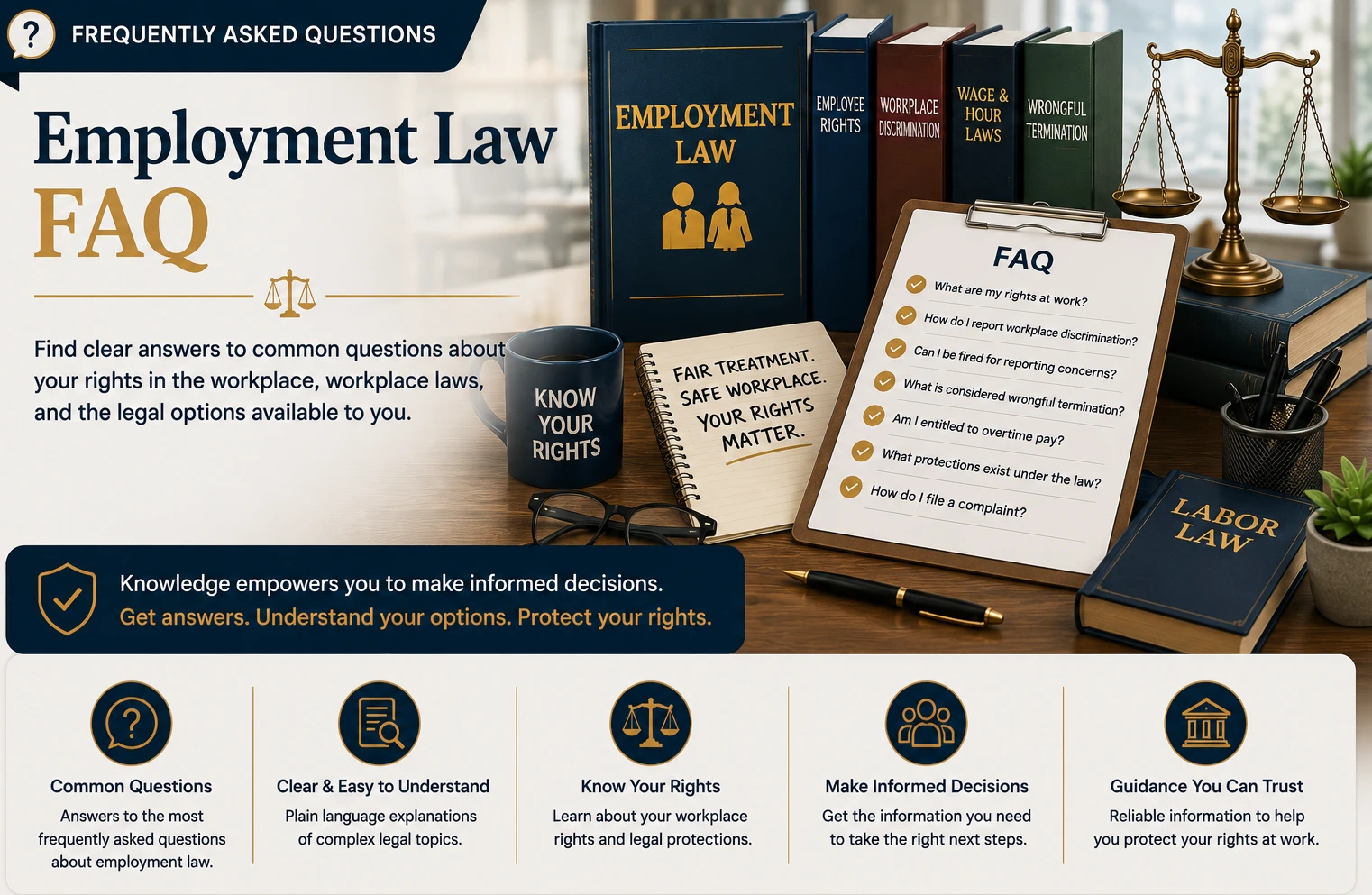
What is Employment Law?
Employment Law is the area of law that governs the relationship between employers and employees. It covers topics such as hiring, wages, overtime pay, workplace discrimination, harassment, wrongful termination, family and medical leave, workplace safety, employee benefits, and retaliation. Employment laws exist to protect the rights of both employees and employers while promoting fair and lawful workplace practices.
What are my rights as an employee?
Employee rights vary depending on federal, state, and local laws, but commonly include protections related to:
- Fair wages and overtime pay
- A workplace free from unlawful discrimination and harassment
- Family and medical leave in qualifying situations
- Reasonable accommodations for disabilities
- Safe working conditions
- Protection from unlawful retaliation
- The ability to report workplace violations without fear of punishment
Understanding your rights can help you recognize when workplace practices may not comply with applicable laws.
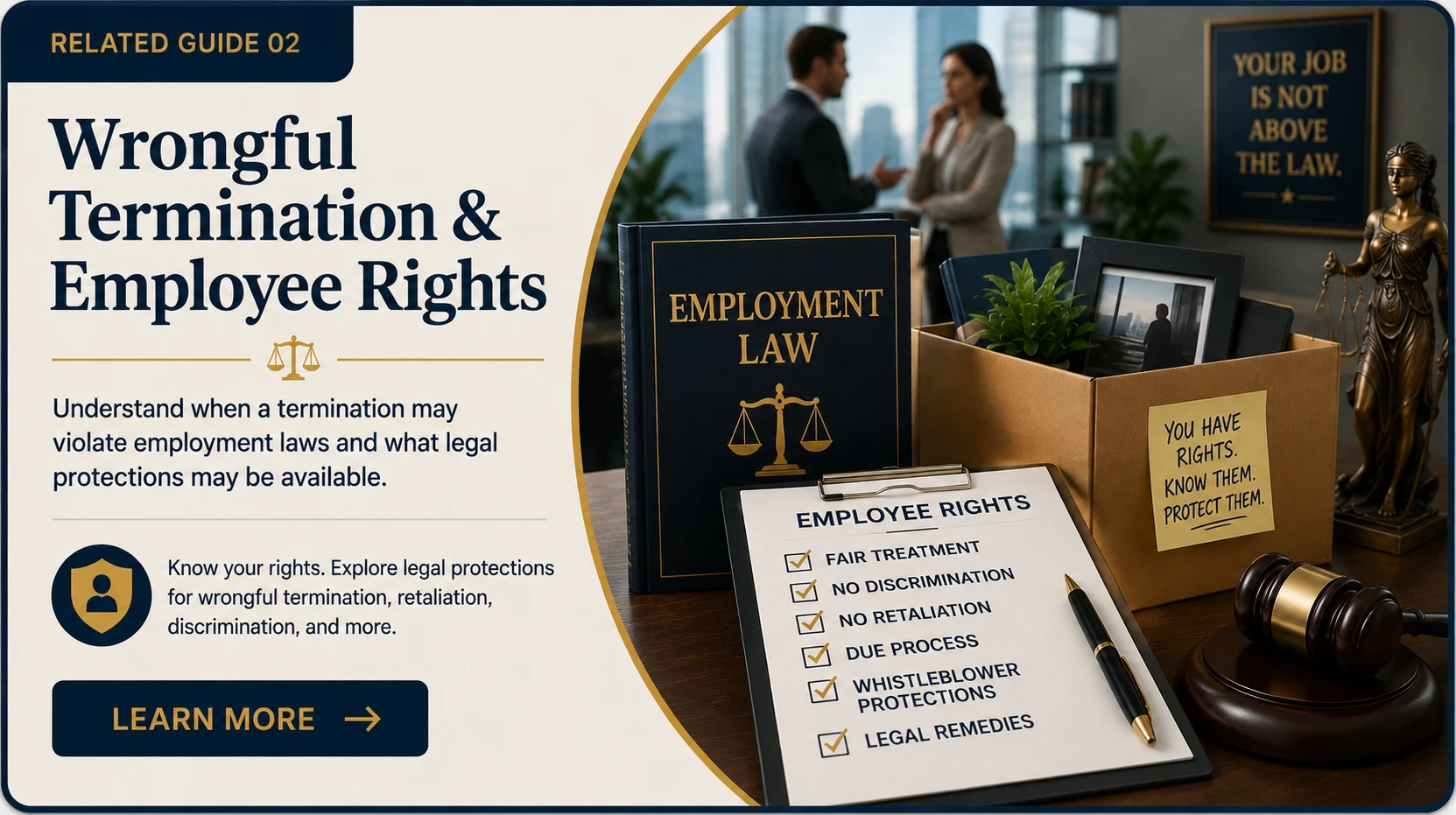
What is considered wrongful termination?
Wrongful termination occurs when an employee is dismissed for a reason that violates applicable employment laws or an employment agreement. Examples may include termination based on unlawful discrimination, retaliation for reporting workplace violations, exercising protected legal rights, or other reasons prohibited by law.
Not every termination is considered wrongful. Employment laws vary depending on the circumstances and applicable state and federal regulations.
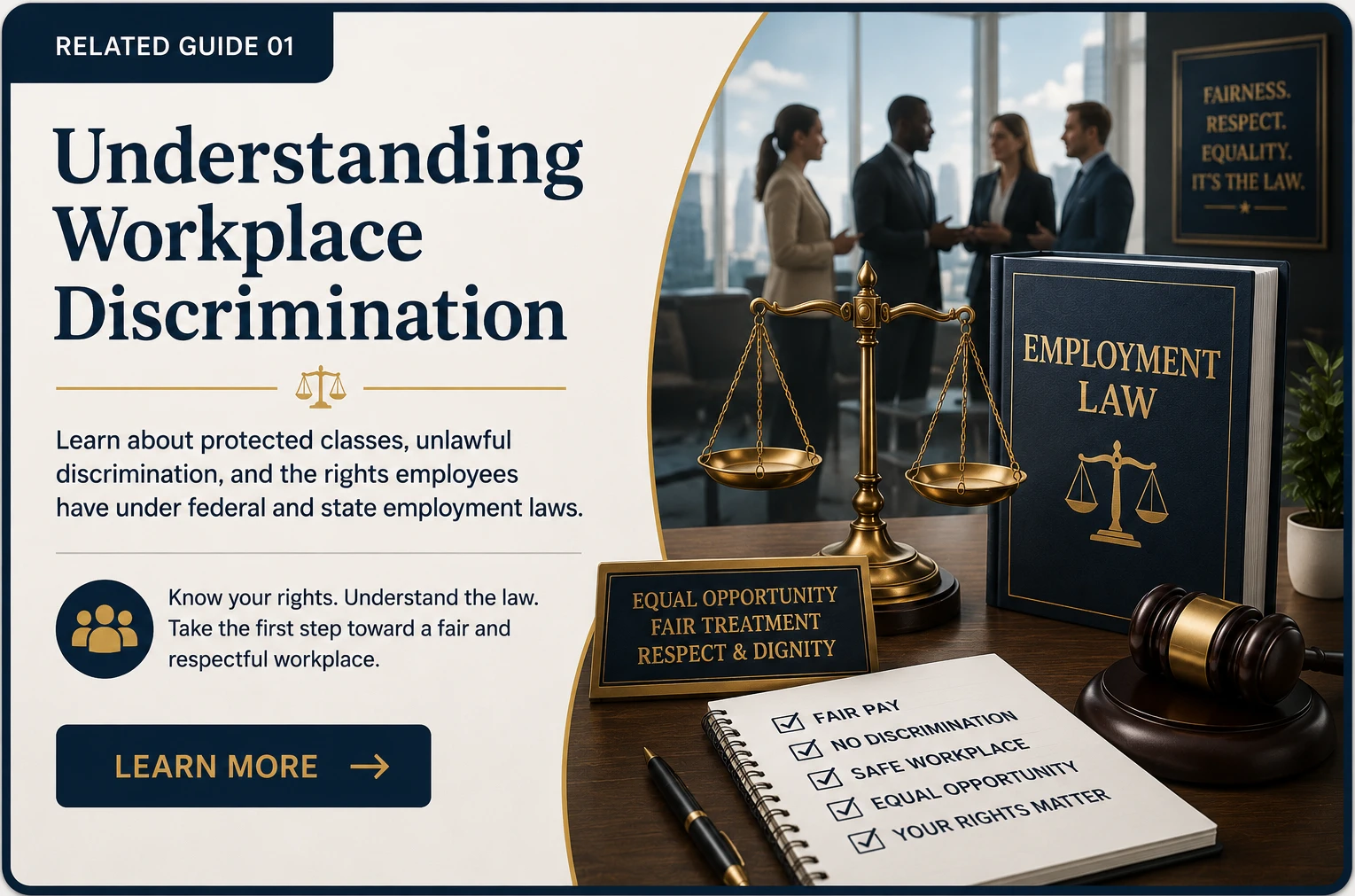
What is workplace discrimination?
Workplace discrimination occurs when an employee or job applicant is treated unfairly because of a legally protected characteristic, such as race, color, religion, sex, national origin, age, disability, or other protected classifications under applicable laws.
Discrimination may affect hiring, promotions, compensation, job assignments, discipline, termination, or other terms and conditions of employment.
What is workplace harassment?
Workplace harassment involves unwelcome conduct that creates an intimidating, hostile, or offensive work environment or interferes with an employee's ability to perform their job. Harassment may involve inappropriate comments, offensive behavior, unwanted advances, or other conduct prohibited by employment laws.
Employers often have policies and procedures for reporting and addressing workplace harassment.
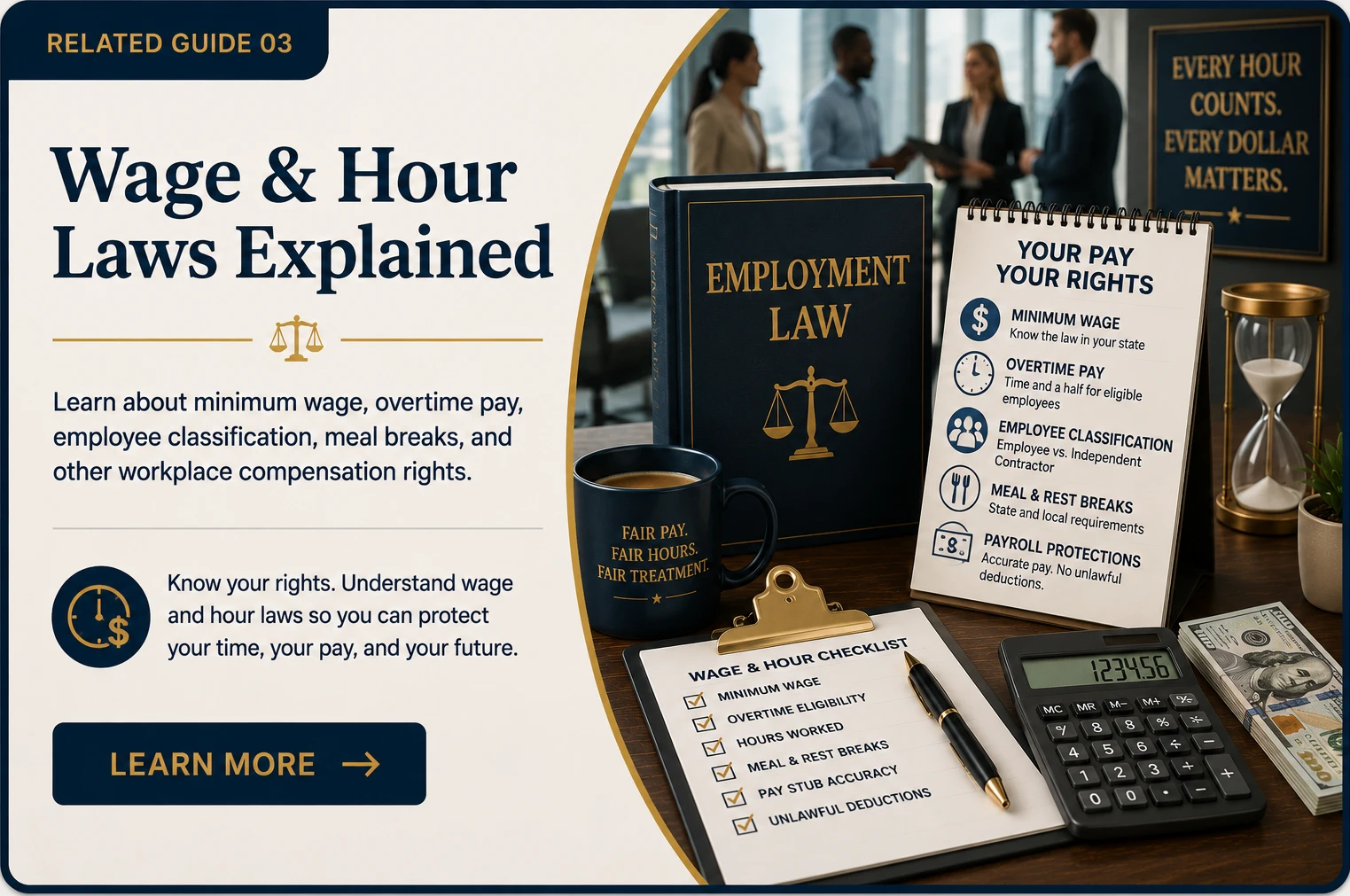
Am I entitled to overtime pay?
Many employees are entitled to overtime pay under federal or state wage and hour laws. Whether overtime applies depends on several factors, including job duties, salary basis, and exemption status.
Because overtime rules can be complex, employees with questions about wage and hour requirements may benefit from reviewing applicable labor laws or seeking legal guidance.
Can my employer retaliate against me for reporting workplace violations?
Many employment laws prohibit employers from retaliating against employees who report discrimination, harassment, wage violations, safety concerns, or other protected workplace activities.
Whether retaliation has occurred depends on the facts of each situation and the applicable laws.
How long do I have to file an employment-related claim?
Time limits for filing employment-related claims vary depending on the type of claim, the agency involved, and the state where the events occurred.
Because deadlines can affect important legal rights, individuals with workplace concerns should become familiar with the applicable filing requirements as early as possible.
What information should I bring to an Employment Law consultation?
Helpful information may include:
- Employment agreements or contracts
- Offer letters
- Employee handbook or workplace policies
- Pay stubs and payroll records
- Performance evaluations
- Emails, text messages, or written communications
- Documentation of workplace incidents
- Names of witnesses
- A timeline of important events
Having organized records can help an attorney better understand your situation.
Can I handle an Employment Law issue without an attorney?
Some workplace concerns can be resolved through internal employer procedures or government agencies. However, employment laws can be complex, particularly when disputes involve discrimination, retaliation, wage claims, employment contracts, or wrongful termination.
An experienced Employment Law attorney can explain your legal rights, evaluate your specific circumstances, and discuss the options that may be available.
When should I contact an Employment Law attorney?
You may wish to consult an Employment Law attorney if you have questions about wrongful termination, workplace discrimination, harassment, unpaid wages, retaliation, employment contracts, family or medical leave, disability accommodations, or other workplace legal issues.
An attorney can review your individual circumstances, explain the applicable laws, and help you understand the legal options that may be available.
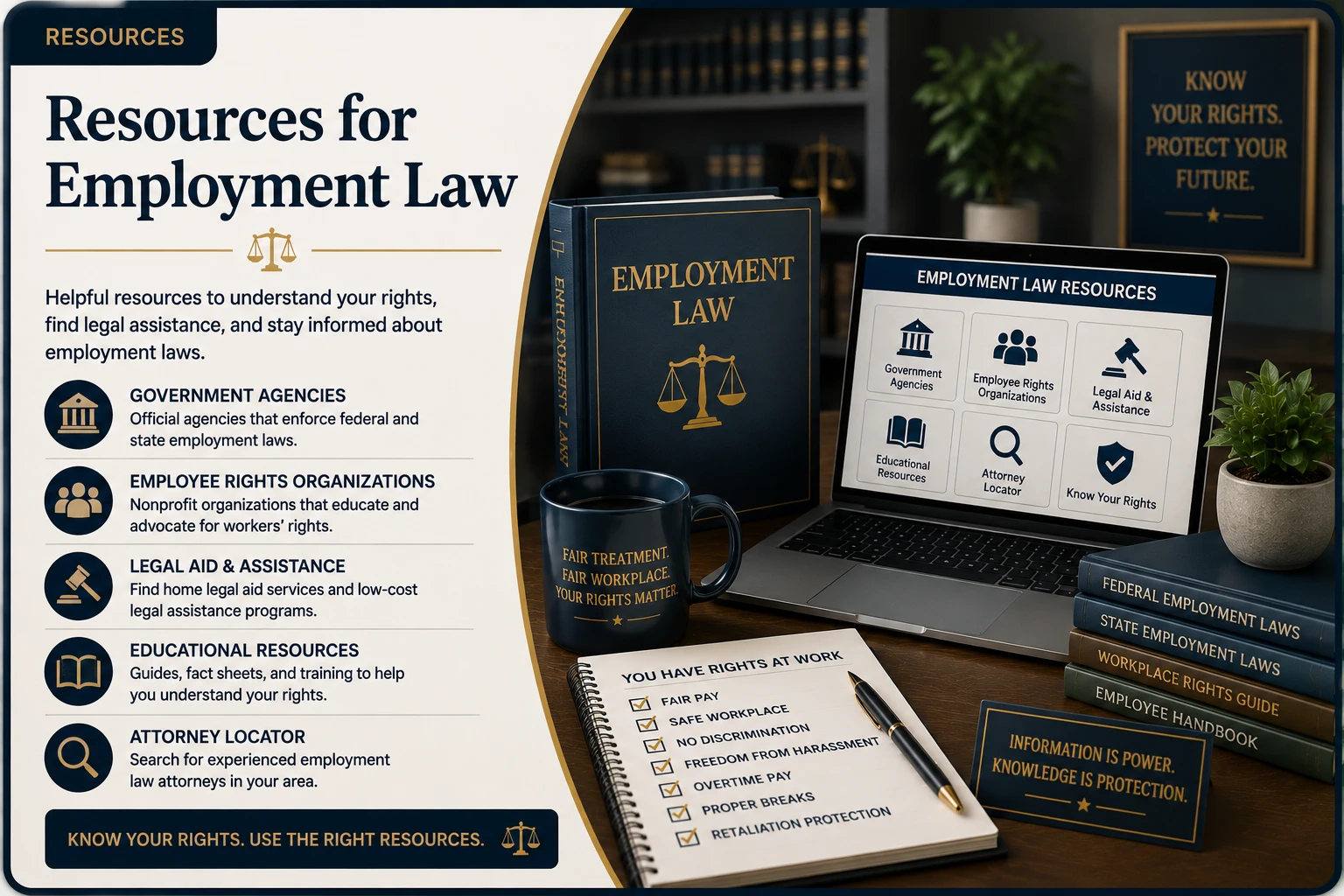
Understanding your workplace rights begins with having access to reliable information. The resources below include government agencies, employee rights organizations, legal aid services, educational materials, and attorney directories that can help you learn more about employment laws, workplace protections, and the options available if you believe your legal rights have been violated.
Whether you're researching discrimination, harassment, wrongful termination, wage and hour laws, family or medical leave, workplace accommodations, or other employment-related issues, these trusted resources can help you make informed decisions before consulting with an Employment Law attorney.
U.S. Department of Labor (DOL)
Learn about federal employment laws, workplace safety, wage and hour requirements, family and medical leave, employee benefits, and other workplace protections administered by the U.S. Department of Labor. The DOL provides official guidance, publications, and educational resources for both employees and employers.
Equal Employment Opportunity Commission (EEOC)
Access official information about workplace discrimination, harassment, retaliation, reasonable accommodations, and employee rights under federal anti-discrimination laws. The EEOC also explains complaint procedures, filing deadlines, mediation programs, and employer responsibilities.
State Labor & Employment Agencies
Find your state's labor department to learn about state-specific employment laws, wage requirements, unemployment benefits, workers' rights, workplace standards, licensing, and other employment-related regulations that may differ from federal law.

Legal Aid & Employee Rights Organizations
Explore nonprofit organizations, legal aid programs, and employee advocacy groups that provide educational materials, legal assistance, workplace rights information, and support for individuals facing employment-related legal issues.

Employment Law Education & Workplace Resources
Browse trusted educational resources covering employment contracts, wrongful termination, workplace discrimination, wage and hour laws, family and medical leave, disability accommodations, workplace safety, and other common Employment Law topics.
Find an Employment Law Attorney
Locate experienced Employment Law attorneys who can assist with workplace discrimination, harassment, wrongful termination, wage disputes, employment agreements, retaliation claims, family and medical leave issues, workplace accommodations, and other employment-related legal matters.
Still Have Questions?
Find an Employment Attorney
Every workplace situation is unique, and the information provided in this guide is intended for general educational purposes only. If you have questions about workplace discrimination, harassment, wrongful termination, wage and hour laws, retaliation, employment contracts, family or medical leave, workplace accommodations, or other employment-related legal issues, speaking with an experienced Employment Law attorney can help you better understand your legal rights, evaluate your options, and determine the best course of action for your specific circumstances.