
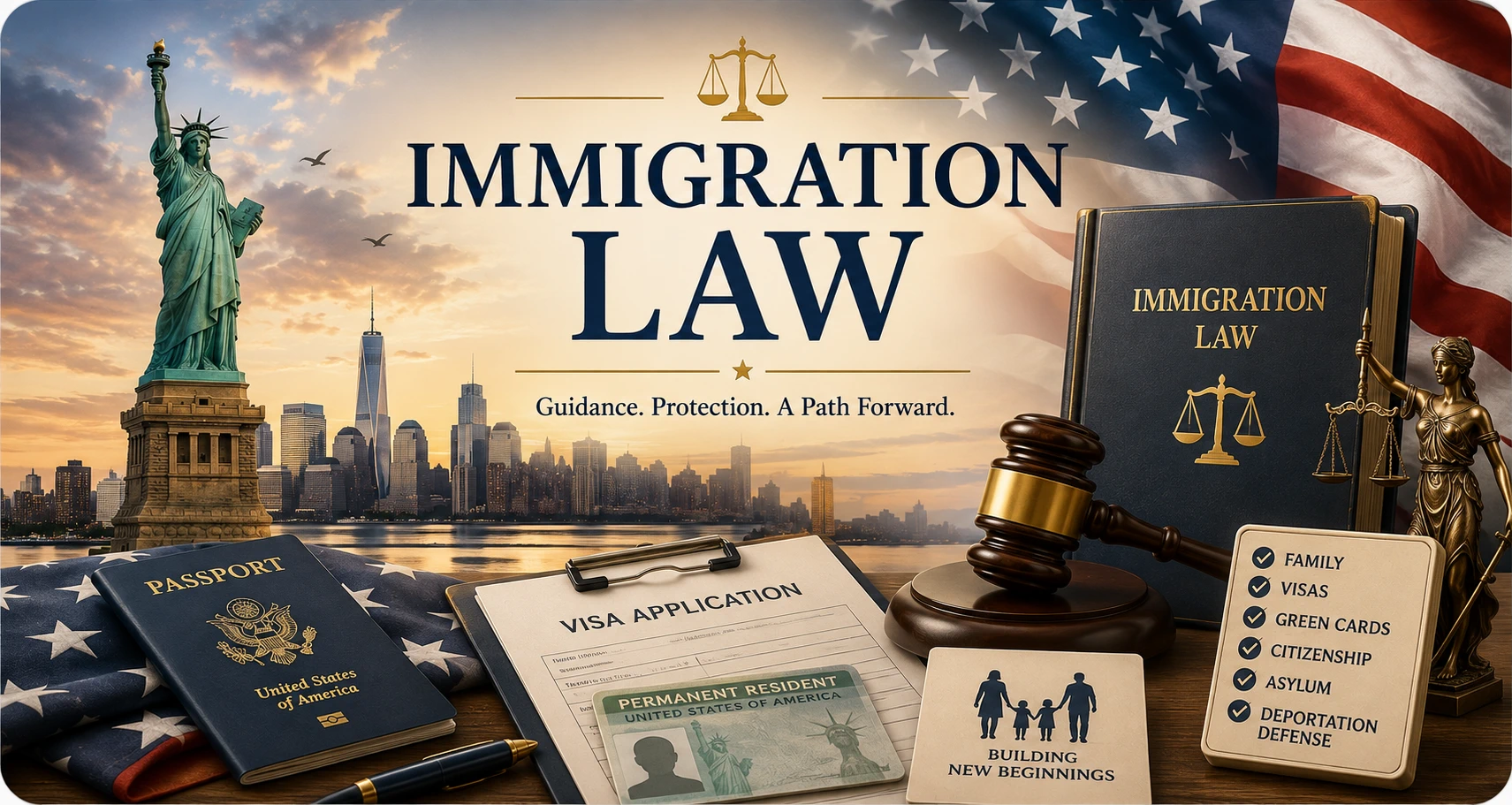
Who this guide is for:
Whether you are applying for a visa, seeking permanent residency, pursuing U.S. citizenship, sponsoring a family member, or facing an immigration-related legal issue, understanding the immigration process can help you make informed decisions. Immigration laws and procedures are often complex, with changing regulations, strict deadlines, and extensive documentation requirements.
This guide is designed for individuals, families, employers, and anyone seeking reliable educational information about Immigration Law. Inside, you'll find practical checklists, explanations of common immigration topics, trusted resources, and answers to frequently asked questions that can help you better understand your rights and available options before consulting an Immigration Law attorney.
While this guide is not a substitute for legal advice, it can help you become a more informed participant in the immigration process and prepare you to ask meaningful questions during a legal consultation.




Key Questions to Ask a [topic] Attorney
Choosing the right attorney begins with asking the right questions. This guide is designed to help you prepare for your consultation by identifying important topics to discuss, understanding your legal options, and comparing attorneys with confidence. While every case is unique, these questions can help you make a more informed decision before selecting legal representation.
Key Questions to Ask an Immigration Law Attorney
Choosing the right attorney begins with asking the right questions. This guide is designed to help you prepare for your consultation by identifying important topics to discuss, understanding your legal options, and comparing attorneys with confidence. While every case is unique, these questions can help you make a more informed decision before selecting legal representation.
How much experience do you have handling immigration cases like mine?
Ask whether the attorney regularly handles matters involving visas, green cards, citizenship, asylum, deportation defense, family sponsorship, or employment-based immigration.
Are you licensed and in good standing to practice law?
Verify that the attorney is licensed in the United States and authorized to represent clients before immigration authorities and courts.
Have you handled cases involving my specific immigration issue?
Immigration law includes many categories, such as:
- Family-based petitions
- Employment visas
- Student visas
- Naturalization
- Removal proceedings
- Adjustment of status
How are your legal fees structured?
Clarify:
- Flat fees
- Hourly rates
- Government filing costs
- Payment plans
- Additional expenses
What immigration options may be available in my situation?
Ask about possible pathways based on:
- Family relationships
- Employment
- Humanitarian protections
- Residency eligibility
- Citizenship requirements
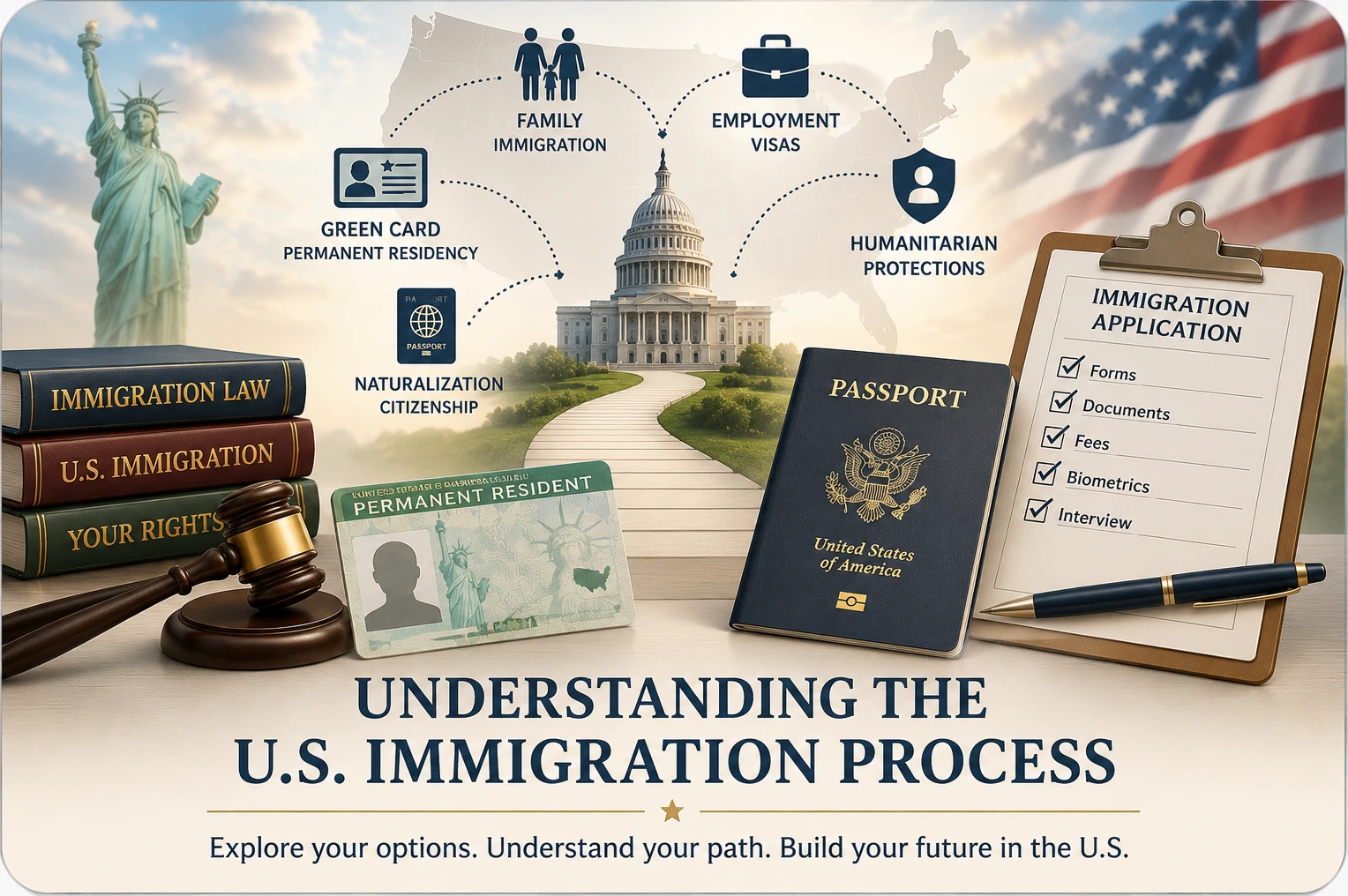
What documents should I begin gathering?
Important documents may include:
- Passports
- Birth certificates
- Marriage certificates
- Employment records
- Immigration notices
- Tax records
What is the estimated timeline for my case?
Processing times may vary significantly depending on:
- Visa category
- Government backlog
- Country of origin
- Security reviews
- Court scheduling
Have you handled cases involving immigration interviews or hearings?
Ask how the attorney prepares clients for:
- USCIS interviews
- Consular processing
- Immigration court hearings
- Appeals
What risks or challenges do you see in my case?
An experienced attorney should discuss possible complications honestly rather than making unrealistic promises.
Will you personally handle my case?
Clarify whether the attorney you meet with will manage your case directly or whether work will be delegated to staff or associates.

How will communication and case updates be handled?
Ask:
- How often updates are provided
- Preferred communication methods
- Expected response times
- Whether multilingual support is available if needed
What should I avoid doing while my case is pending?
Important issues may include:
- Travel restrictions
- Employment authorization concerns
- Missed appointments
- Filing errors
- Criminal charges
Can you help if my application is denied?
Ask about:
- Appeals
- Motions to reopen
- Waivers
- Alternative immigration options
What happens if my immigration status expires during the process?
Understanding deadlines and status requirements may help avoid complications or penalties.
Are there any recent immigration law or policy changes that may affect my case?
Immigration laws, regulations, and processing policies may change frequently and can affect timelines or eligibility requirements.
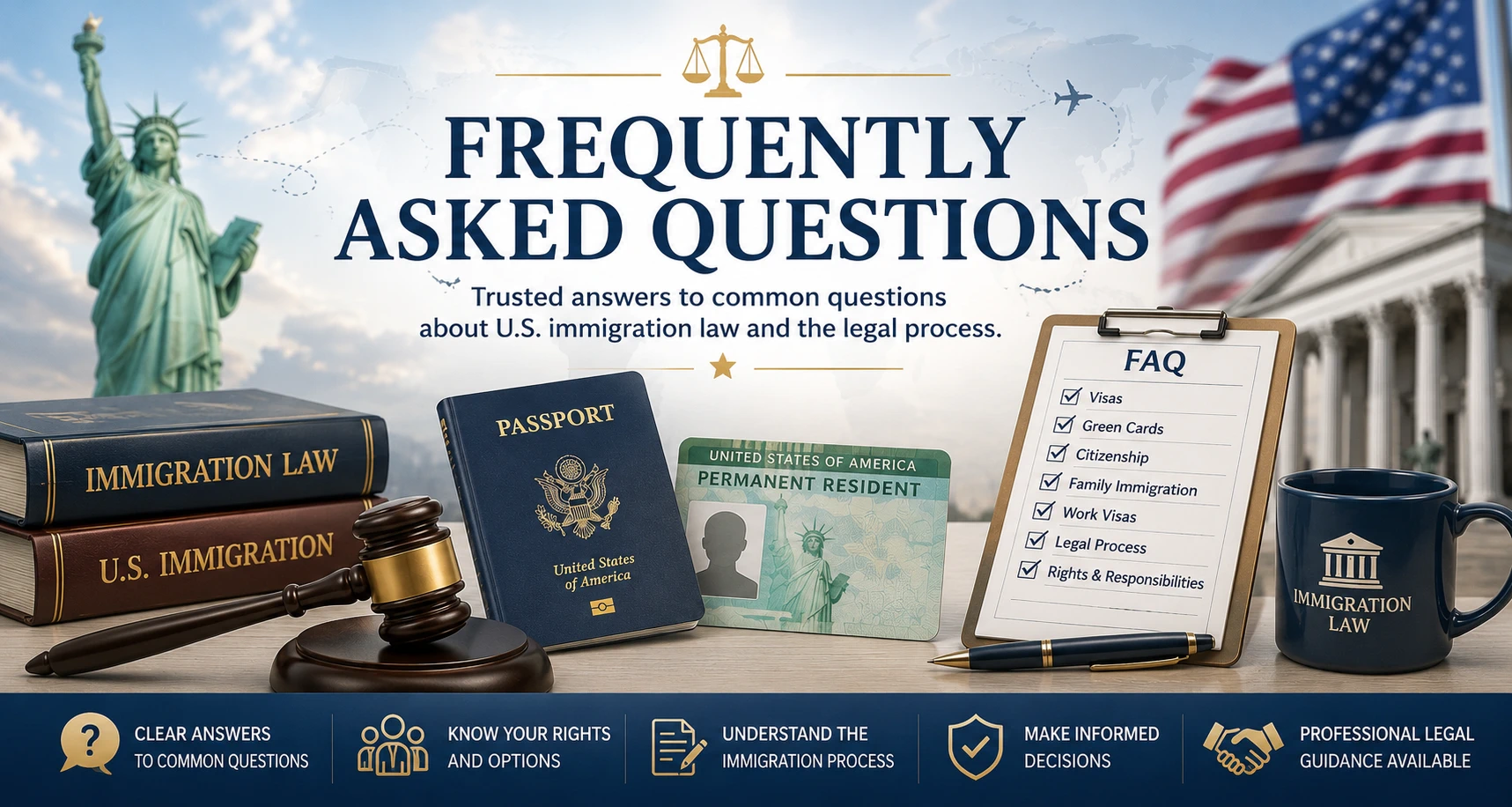
What is Immigration Law?
Immigration Law is the area of law that governs how individuals may enter, live, work, study, or become citizens of the United States. It includes laws related to visas, permanent residency (Green Cards), family-sponsored immigration, employment-based immigration, humanitarian protections, naturalization, and removal (deportation) proceedings.
Because immigration laws and policies can change over time, understanding the current legal requirements is an important part of planning your immigration journey.
What is the difference between a visa and a Green Card?
A visa generally allows someone to enter the United States for a specific purpose, such as tourism, education, employment, or visiting family. Many visas are temporary and have expiration dates or restrictions.
A Green Card, also known as lawful permanent resident status, allows an individual to live and work permanently in the United States while enjoying many legal rights and protections. Green Card holders may also become eligible to apply for U.S. citizenship after meeting certain requirements.
How can someone become a U.S. citizen?
Many people become U.S. citizens through a process called naturalization. Eligibility often depends on factors such as:
- Length of permanent residency
- Continuous residence in the United States
- Physical presence requirements
- Good moral character
- English language ability
- Knowledge of U.S. history and government
- Successfully completing the naturalization interview and examination
Eligibility requirements vary depending on individual circumstances.
What is family-based immigration?
Family-based immigration allows certain U.S. citizens and lawful permanent residents to sponsor eligible family members for immigration benefits.
Depending on the relationship, family members may be eligible to apply for immigrant visas or permanent residency. Processing times and eligibility requirements vary based on the family relationship and immigration category.
What is employment-based immigration?
Employment-based immigration allows qualified foreign workers to obtain authorization to work in the United States through employer sponsorship or other qualifying programs.
Some employment categories may lead to temporary work visas, while others may provide a pathway to lawful permanent residency.
Requirements depend on the type of employment, education, work experience, and applicable immigration laws.
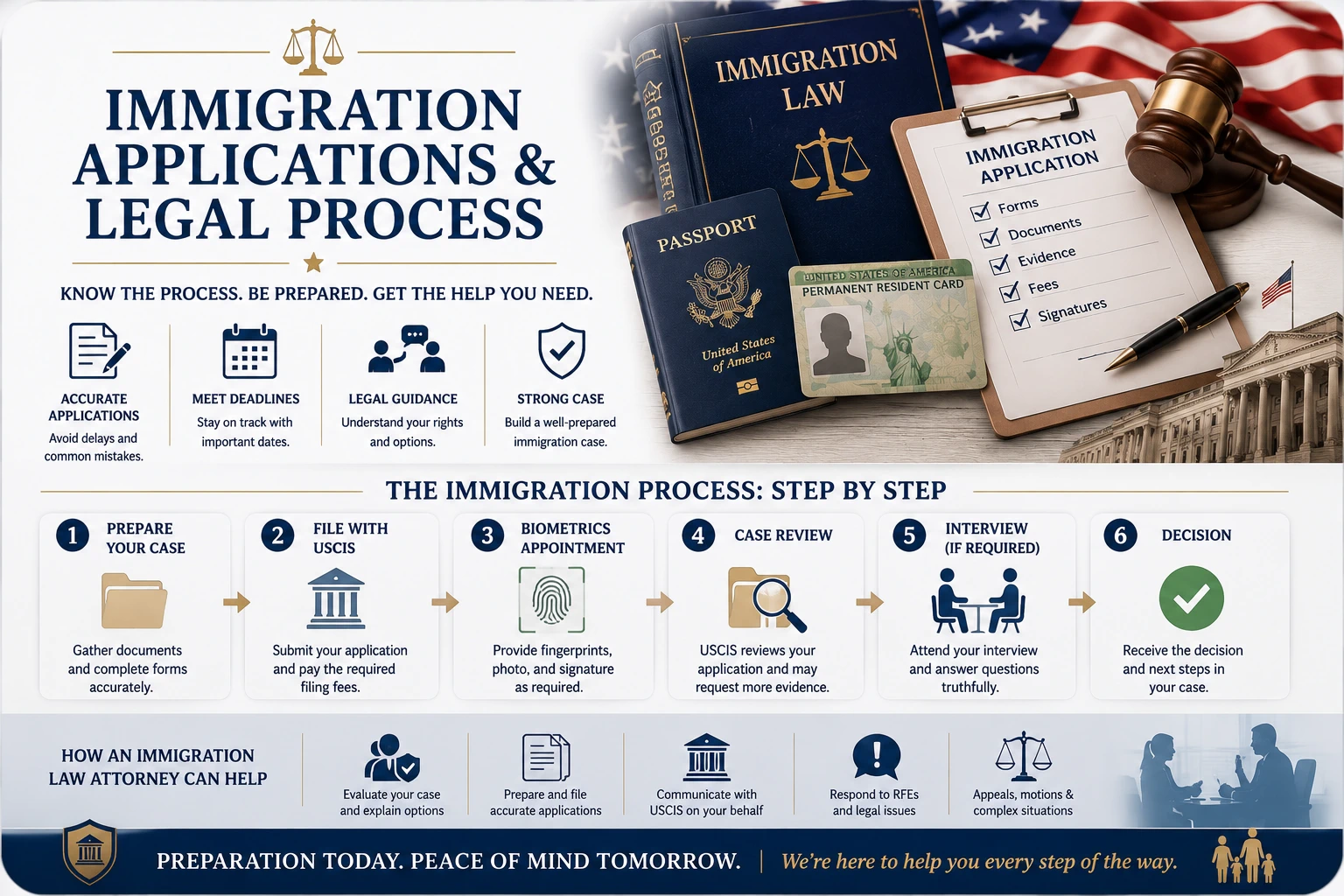
What happens during the immigration application process?
Although every case is different, many immigration applications involve several common steps, including:
- Determining eligibility
- Completing required forms
- Gathering supporting documents
- Paying filing fees
- Submitting the application to USCIS or another agency
- Attending a biometrics appointment (if required)
- Participating in an interview (when required)
- Waiting for a decision
Some applications may also require additional documentation or responses to government requests.
What is a Request for Evidence (RFE)?
A Request for Evidence (RFE) is a notice from U.S. Citizenship and Immigration Services (USCIS) requesting additional information or documentation before making a decision on an application.
Receiving an RFE does not necessarily mean an application will be denied. It simply means additional information is needed to continue processing the case.
Responding accurately and before the stated deadline is important.
How long does the immigration process take?
Processing times vary significantly depending on the type of application, immigration category, government workload, country of origin, and individual circumstances.
Some applications may be completed within months, while others can take several years. Government agencies regularly update estimated processing times for many immigration benefits.
Can an Immigration Law attorney help with my application?
An Immigration Law attorney may assist by:
- Explaining available immigration options
- Determining eligibility
- Preparing applications and supporting documentation
- Responding to Requests for Evidence
- Representing clients during certain proceedings
- Helping resolve complex immigration issues
- Advising clients about changing immigration laws
Whether legal representation is appropriate depends on the complexity of the individual's situation.
What documents should I bring to an immigration consultation?
Helpful documents may include:
- Passport or travel documents
- Birth certificate
- Marriage or divorce records (if applicable)
- Immigration notices or correspondence
- Visa documentation
- Permanent Resident Card (if applicable)
- Employment records
- Tax records (when relevant)
- Court records (if applicable)
- A timeline of important immigration events
Having organized documentation can help make the consultation more productive.
Can I handle my immigration case without an attorney?
Some individuals successfully complete straightforward immigration applications on their own. However, more complex matters—such as prior immigration violations, removal proceedings, criminal history, Requests for Evidence, or humanitarian cases—may involve significant legal issues.
An experienced Immigration Law attorney can explain the applicable laws, review your circumstances, and help you understand the options available.
When should I contact an Immigration Law attorney?
You may wish to consult an Immigration Law attorney if you have questions about:
- Family-based immigration
- Employment visas
- Green Cards
- U.S. citizenship and naturalization
- Asylum or refugee protection
- Deportation or removal proceedings
- Immigration appeals
- Requests for Evidence
- Immigration waivers
- Complex immigration situations involving multiple legal issues
An attorney can review your specific circumstances, explain the immigration process, and help you understand the legal options that may be available.
Do I Really Need an Immigration Law Attorney?
Not every immigration matter requires legal representation, and some individuals successfully complete straightforward immigration applications on their own. However, immigration laws can be complex, and even small mistakes on forms, missing documentation, or missed deadlines may lead to delays, Requests for Evidence (RFEs), or application denials.
An experienced Immigration Law attorney may be especially helpful if your case involves family sponsorship, employment-based immigration, permanent residency (Green Cards), naturalization, asylum, removal (deportation) proceedings, prior immigration violations, criminal history, or other complex legal issues. An attorney can explain the laws that apply to your situation, help prepare required documents, identify potential challenges, and guide you through the immigration process.
If you are uncertain about your eligibility, have received notices from U.S. Citizenship and Immigration Services (USCIS), or simply want to better understand your options before filing an application, speaking with a qualified Immigration Law attorney can provide valuable guidance and help you make informed decisions based on your individual circumstances.
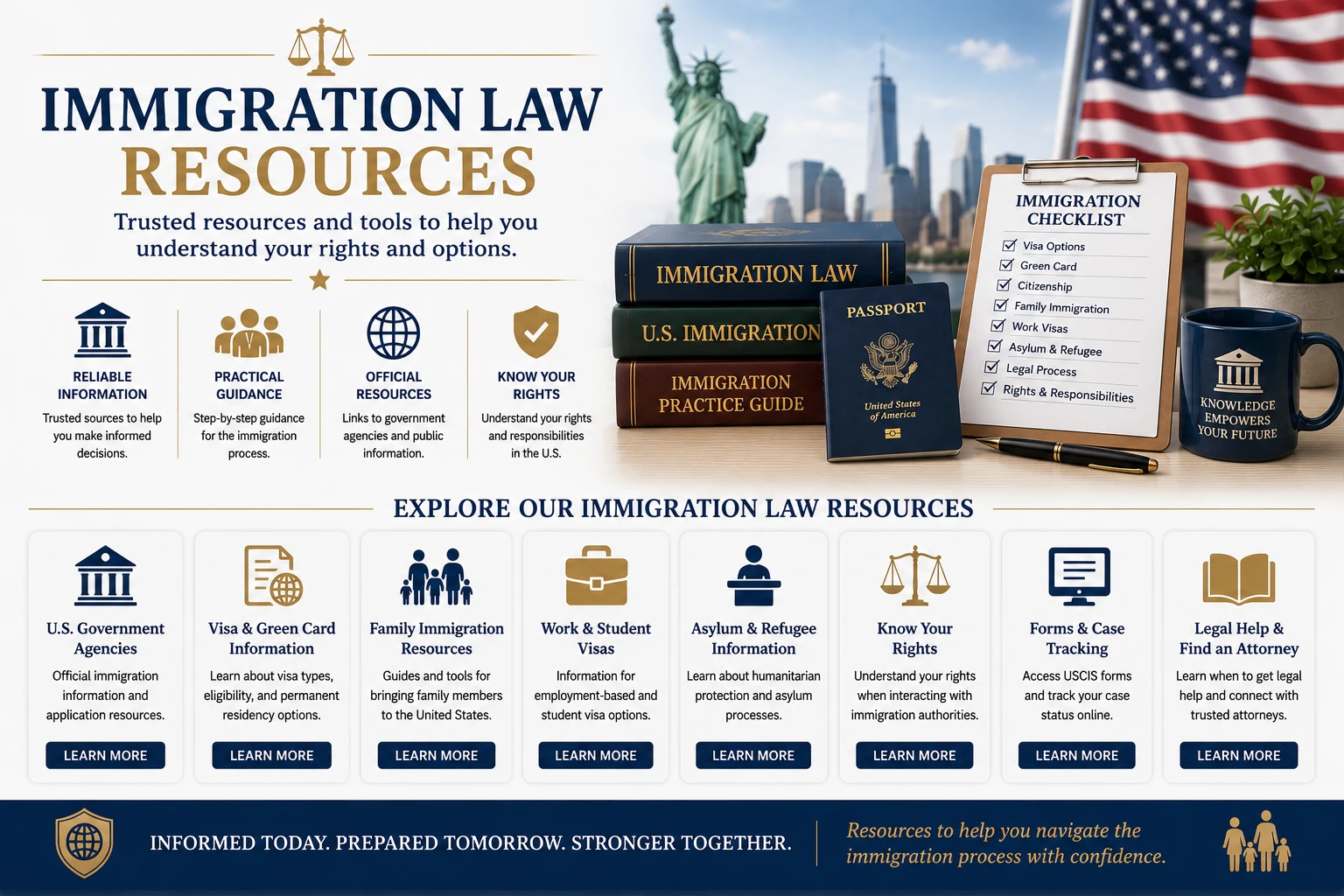
Understanding the U.S. immigration system begins with access to accurate, up-to-date information from trusted sources.
The resources below include official government agencies, educational organizations, legal aid services, and practical tools designed to help individuals and families better understand visas, Green Cards, citizenship, family-based immigration, employment-based immigration, asylum, immigration rights, and the legal process.
Whether you are preparing an application, researching your options, or deciding whether to consult an Immigration Law attorney, these resources can help you make informed decisions with greater confidence.

U.S. Government Immigration Agencies
Access official information from U.S. government agencies responsible for immigration services, policies, forms, processing updates, and legal guidance. These resources provide reliable information about visas, Green Cards, citizenship, case processing, and immigration requirements.

Visa & Green Card Information
Learn about temporary visas, lawful permanent residency (Green Cards), eligibility requirements, application procedures, and the rights and responsibilities associated with different immigration categories.

Family Immigration Resources
Explore trusted resources explaining family-sponsored immigration, petitions for relatives, fiancé visas, family reunification, sponsorship requirements, and the immigration process for eligible family members.

Work & Student Visas
Find educational information about employment-based visas, student visas, exchange visitor programs, temporary work authorization, and other legal pathways for working or studying in the United States.

Asylum & Refugee Information
Review educational resources covering asylum, refugee protections, humanitarian programs, eligibility requirements, legal rights, and the application process for individuals seeking protection in the United States.

Know Your Rights
Learn about the legal rights and responsibilities of immigrants, visa holders, lawful permanent residents, and individuals interacting with immigration authorities. Understanding your rights can help you make informed decisions throughout the immigration process.
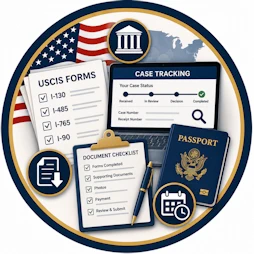
Forms & Case Tracking
Access official immigration forms, filing instructions, processing updates, online case status tools, and other resources that help applicants monitor the progress of their immigration matters.

Find an Immigration Law Attorney
Locate experienced Immigration Law attorneys who assist with visas, Green Cards, citizenship, family immigration, employment-based immigration, asylum matters, deportation defense, immigration appeals, and other complex immigration issues. Choosing qualified legal representation can help you better understand your options and navigate the immigration process with confidence.
Still Have Questions?
Find an Immigration Attorney
Whether you're applying for a visa, seeking a Green Card, pursuing U.S. citizenship, sponsoring a family member, requesting asylum, or facing another immigration matter, understanding your legal options is an important first step. Immigration laws are complex, and the requirements, forms, and timelines can vary depending on your unique circumstances.
An experienced Immigration Law attorney can review your situation, explain the immigration pathways that may be available, help prepare and file applications, respond to government requests, and provide guidance throughout the legal process. If your case involves prior immigration issues, removal proceedings, humanitarian protections, or other complex legal matters, professional legal representation may help you better understand your rights and available options.
Use our attorney directory to find qualified Immigration Law attorneys serving your area and take the next step toward resolving your immigration matter with confidence.