

Who this guide is for:
If you or someone you love has been injured because of another person's negligence, this guide is designed to help you make informed decisions before choosing a personal injury attorney. Whether your injuries resulted from a car accident, truck accident, motorcycle crash, slip and fall, dog bite, or another preventable incident, understanding the legal process can help you protect your rights and avoid costly mistakes.
This guide provides a practical checklist of questions to ask during an attorney consultation, explains important topics such as legal fees and case evaluations, and offers resources to help you compare attorneys with confidence. Its purpose is to educate—not provide legal advice—so you can feel better prepared before making one of the most important decisions following an injury.




Key Questions to Ask a Personal Injury Attorney
Choosing the right attorney begins with asking the right questions. This guide is designed to help you prepare for your consultation by identifying important topics to discuss, understanding your legal options, and comparing attorneys with confidence. While every case is unique, these questions can help you make a more informed decision before selecting legal representation.
How much experience do you have handling personal injury cases like mine?
Ask whether the attorney regularly handles cases involving car accidents, slip-and-fall injuries, medical negligence, or other injuries similar to your situation.
Have you handled cases that went to trial?
Many personal injury cases settle out of court, but you want to know whether the attorney is prepared to go to trial if necessary.
What is your success rate with settlements and verdicts?
While no attorney can guarantee results, understanding their past experience may help evaluate their background and approach.
Will you personally handle my case?
Some firms pass cases to junior associates or case managers. Clarify who your primary point of contact will be.
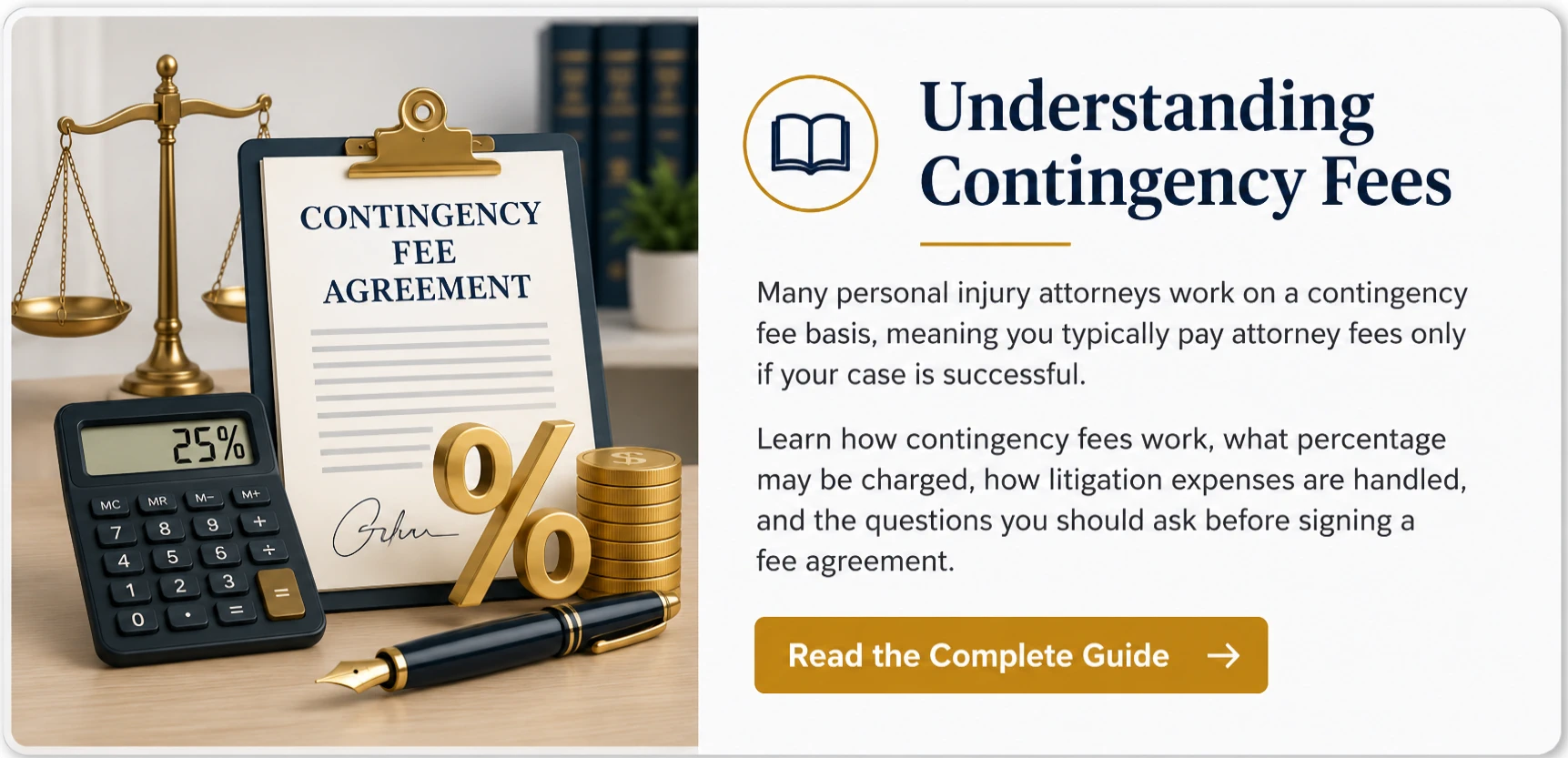
How do contingency fees work?
Ask:
- What percentage will the attorney charge?
- Does the percentage increase if the case goes to trial?
- Are there additional costs besides attorney fees?
What case-related expenses am I responsible for?
Expenses may include:
- Medical record retrieval
- Expert witnesses
- Court filing fees
- Deposition costs
Clarify whether these costs are deducted before or after settlement distribution.
What is the estimated timeline for my case?
Personal injury claims can take months or years depending on:
- Injury severity
- Insurance negotiations
- Court scheduling
- Medical treatment duration
How will you communicate updates about my case?
Ask:
- How often will updates be provided?
- Will communication occur by phone, email, or client portal?
- Who should you contact with questions?
What challenges or weaknesses do you see in my case?
An honest attorney should discuss both strengths and potential obstacles rather than making unrealistic promises.
What compensation may be available in my case?
Potential compensation may include:
- Medical expenses
- Lost wages
- Pain and suffering
- Future treatment costs
- Property damage
Have you dealt with the insurance company involved in my case before?
Attorneys familiar with certain insurance carriers may better understand common negotiation tactics and claim handling practices
Should I continue medical treatment during the claim process?
Consistent medical treatment may affect both recovery documentation and claim evaluation.
What should I avoid doing while the case is pending?
Important topics may include:
- Social media activity
- Recorded insurance statements
- Signing documents without review
- Delaying treatment
What happens if my case is unsuccessful?
Clarify whether you will owe:
- Case expenses
- Court costs
- Expert fees
if compensation is not recovered.
Is there a deadline to file my claim?
Personal injury claims are subject to statutes of limitations that vary by state and case type. Missing a deadline may affect your ability to recover compensation.
How do I know if I have a personal injury case?
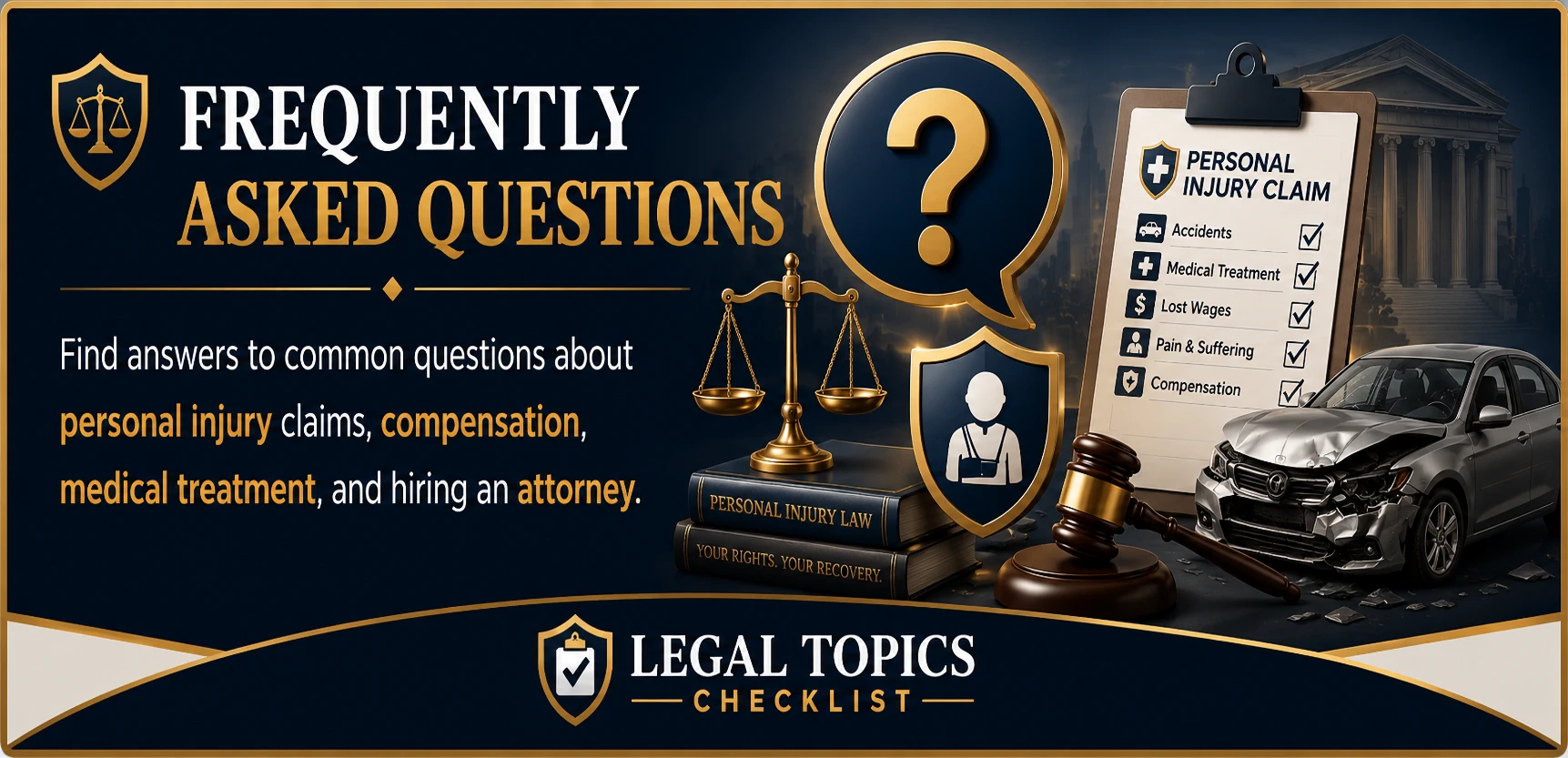
If you were injured because someone else acted negligently—such as in a car accident, slip and fall, or dog bite—you may have a valid personal injury claim. An attorney can evaluate the facts of your case and explain your legal options during a consultation.
How much does a personal injury attorney cost?
Most personal injury attorneys work on a contingency fee basis, meaning they are only paid if they recover compensation for you. Be sure to ask how fees, costs, and expenses are handled before signing any agreement.
What should I bring to my consultation?
Bring any police reports, accident reports, photographs, insurance information, medical records, medical bills, witness information, and correspondence you've received from insurance companies. The more information you provide, the better an attorney can evaluate your case.
How long do I have to file a personal injury claim?
Every state has a statute of limitations that limits the time you have to file a lawsuit. Because these deadlines vary and missing them can affect your rights, it's important to consult an attorney as soon as practical after an injury.
Should I speak with the insurance company before hiring an attorney?
You should be cautious when speaking with insurance adjusters. Statements you make may affect your claim. Many people choose to consult with an attorney before giving recorded statements or accepting a settlement offer.
How long will my case take?
Every case is different. The length of a personal injury claim depends on the severity of the injuries, medical treatment, insurance negotiations, and whether litigation becomes necessary.
Will my case go to court?
Many personal injury claims are resolved through settlement negotiations. However, if a fair settlement cannot be reached, your attorney may recommend filing a lawsuit and, if necessary, taking the case to trial.
What happens if I decide not to hire an attorney?
You are not required to hire an attorney after a consultation. Many attorneys offer an initial consultation to help you understand your options. Taking time to compare attorneys and make an informed decision is often worthwhile before moving forward.
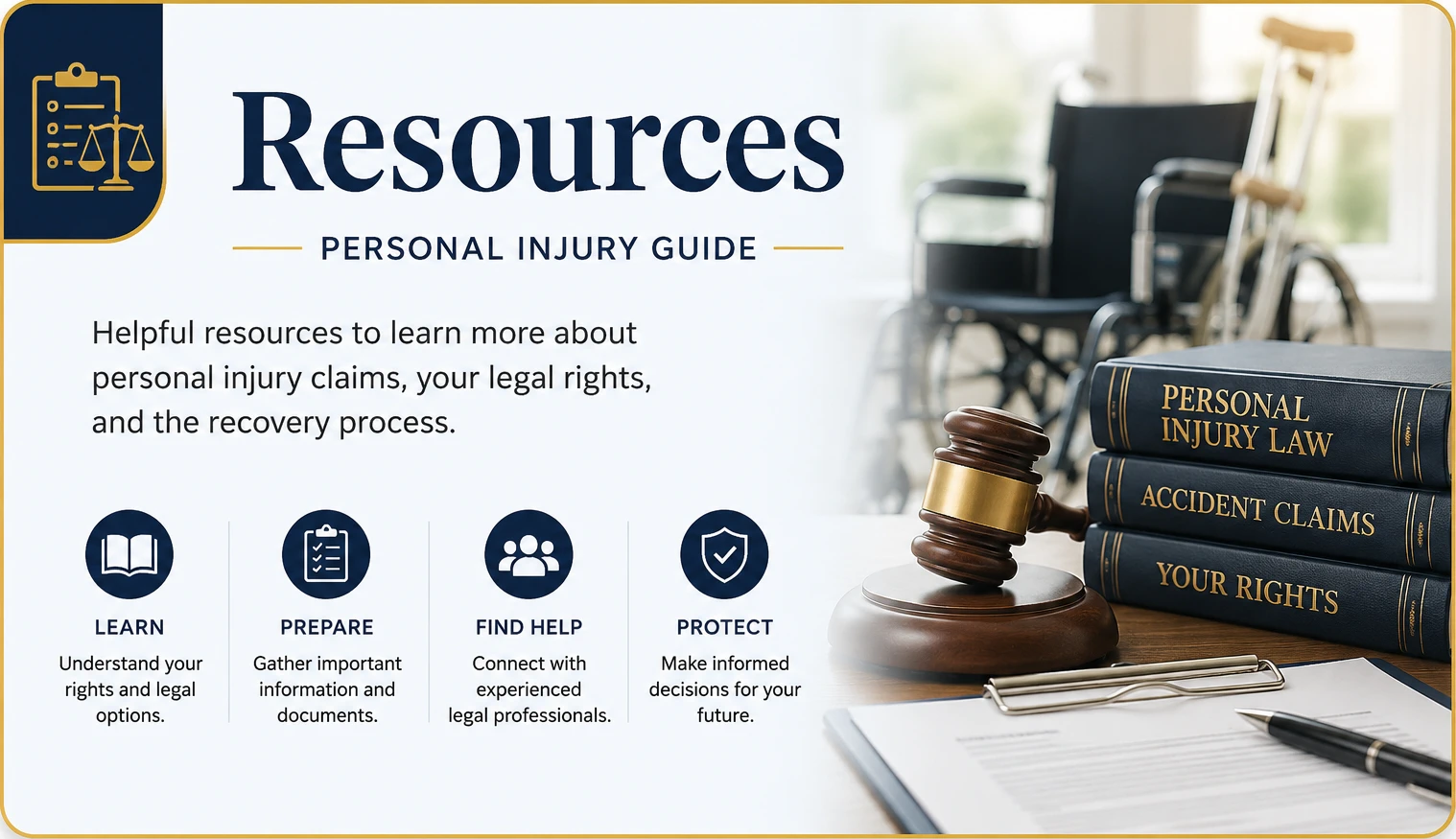
Before contacting an attorney, it can be helpful to review information provided by official government agencies and trusted organizations. The following resources offer educational information about personal injury claims, vehicle safety, injury prevention, consumer protection, and related legal topics.

National Highway Traffic Safety Administration (NHTSA)
Provides information on vehicle safety, recalls, crash statistics, and traffic safety education.

Centers for Disease Control and Prevention (CDC) – Injury Center
Offers information about injury prevention, traumatic brain injuries, falls, and public health resources related to personal injuries.

National Safety Council (NSC)
Provides educational resources about preventing injuries at home, on the road, and in the workplace.

Questions to Ask Before Hiring an Attorney
Learn how to compare attorneys, understand fee agreements, and prepare for your consultation using our comprehensive hiring guide.
Still Have Questions?
Find a Personal Injury Attorney
Every accident and injury case is unique, and the information provided in this guide is intended for general educational purposes only. If you have questions about liability, insurance claims, medical expenses, lost wages, pain and suffering, settlement negotiations, or whether you may have a valid personal injury claim, speaking with an experienced Personal Injury attorney can help you better understand your legal rights, available options, and the next steps that may be appropriate for your situation.