
Who this guide is for:
Planning for the future is one of the most important steps you can take to protect yourself, your loved ones, and the assets you've worked hard to build. Whether you're creating your first will, considering a trust, planning for possible incapacity, or updating existing estate planning documents, choosing the right attorney can help you make informed decisions with confidence.
This Estate Planning Guide is designed for individuals and families who are considering hiring an estate planning attorney and want to better understand the questions to ask before making that decision. The checklist covers topics such as wills, trusts, powers of attorney, healthcare directives, probate planning, asset protection, and keeping your estate plan up to date.
Our goal is not to recommend any particular attorney or legal strategy, but to help you become a more informed consumer by providing practical questions and educational information to support meaningful conversations during your attorney consultation.



Key Questions to Ask an Estate Planning Attorney
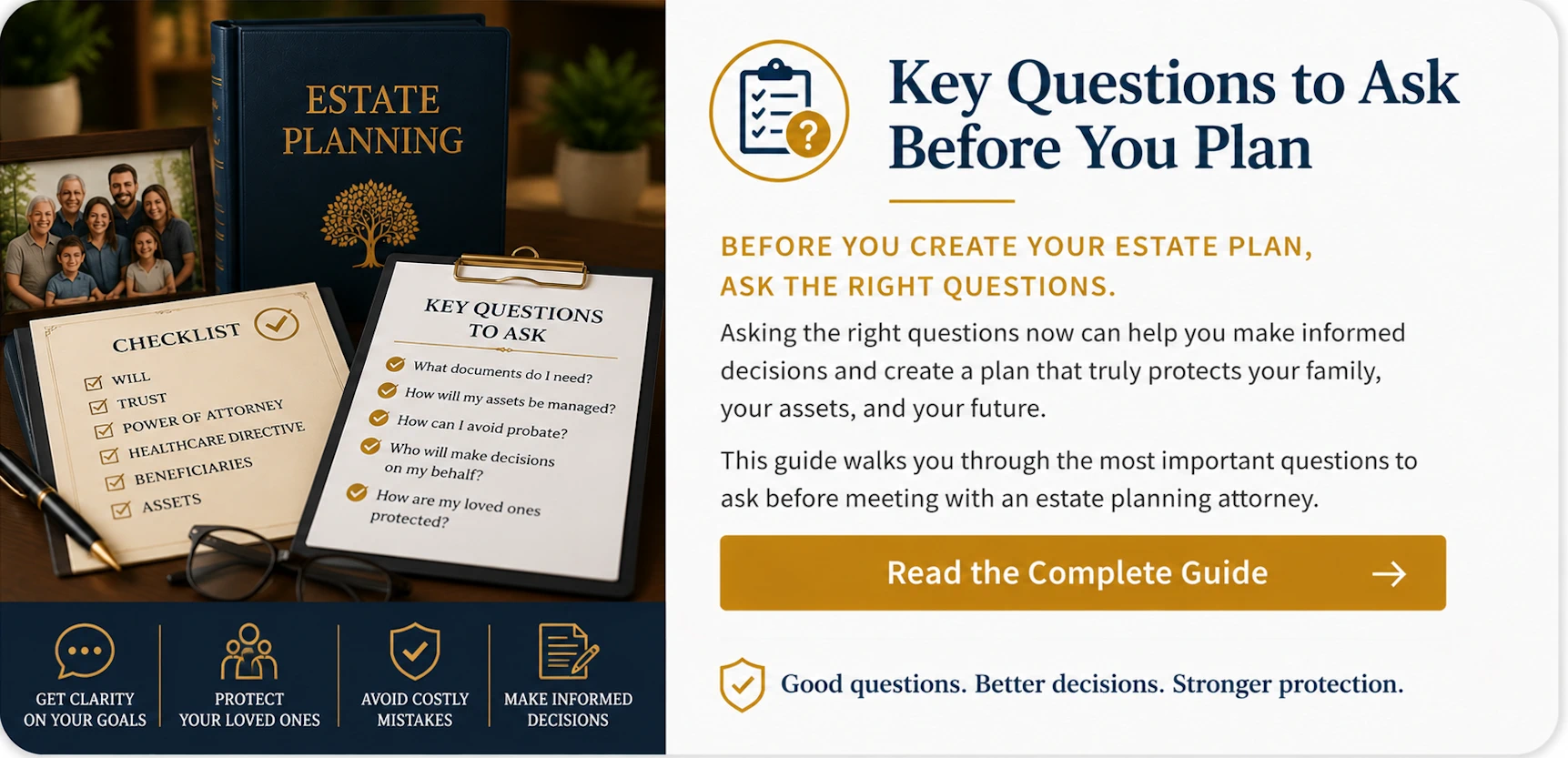
Choosing the right attorney begins with asking the right questions. This guide is designed to help you prepare for your consultation by identifying important topics to discuss, understanding your legal options, and comparing attorneys with confidence. While every case is unique, these questions can help you make a more informed decision before selecting legal representation.
How much experience do you have with estate planning matters?
Ask whether the attorney regularly handles wills, trusts, powers of attorney, healthcare directives, and probate-related matters.
What estate planning documents do you recommend for my situation?
Depending on your goals and financial circumstances, an estate plan may include:
- Last Will and Testament
- Revocable living trust
- Durable power of attorney
-
Healthcare Power of Attorney (Medical Power of Attorney)
- Living Will (Advance Healthcare Directive)
- HIPAA Authorization
- Beneficiary Designations
- Guardianship Designations for Minor Children (when applicable)
How can I help my family avoid probate?
Ask whether trusts or other planning strategies may help simplify the transfer of assets after death.
How are your legal fees structured?
Clarify whether the attorney charges:
- Flat fees
- Hourly rates
- Package pricing
for estate planning services.
How often should my estate plan be updated?
Life events such as marriage, divorce, births, deaths, relocation, or significant financial changes may require updates to your plan

How can I protect minor children or dependents?
Ask about:
- Naming guardians
- Trust arrangements
- Special needs planning
- Asset management for minors
Will my estate plan help minimize taxes or legal complications?
Estate planning strategies may vary depending on:
- Estate size
- State laws
- Business ownership
- Investment holdings
What happens if I become incapacitated?
Ask how powers of attorney and healthcare directives may allow trusted individuals to make financial or medical decisions on your behalf.
How should beneficiary designations be coordinated with my estate plan?
Retirement accounts, life insurance policies, and other assets may pass outside a will depending on beneficiary designations.
What assets should be included in my estate plan?
Discuss:
- Real estate
- Bank accounts
- Investments
- Business interests
- Digital assets
- Personal property
Should I consider creating a trust?
Trusts may offer benefits related to:
- Privacy
- Probate avoidance
- Asset management
- Tax planning
- Long-term distribution control
How can I ensure my documents comply with state laws?
Estate planning requirements may vary by state, including signing, witnessing, and notarization rules.
What happens if someone contests my will or trust?
Ask about steps that may reduce disputes or challenges among beneficiaries and family members.
How should business ownership or family property be handled?
If you own a business, rental property, or shared assets, ask how succession planning may affect your estate strategy.
How can I organize my estate plan for my family?
Ask how documents should be stored, shared, and updated so trusted individuals can easily access important information when needed.

Do I really need an estate plan if I don't have many assets?
Yes. Estate planning isn't just for wealthy individuals. An estate plan helps ensure your wishes are followed regarding your property, finances, healthcare decisions, and the care of minor children. Even a simple will and powers of attorney can provide important protections for you and your family.
What's the difference between a will and a trust?
A will explains how you want your assets distributed after your death and may require probate. A trust can hold and manage assets during your lifetime and after your death, often helping your beneficiaries avoid probate while providing additional control over how assets are distributed.
What happens if I die without a will?
If you die without a valid will, your state's intestacy laws determine how your property is distributed. The outcome may not reflect your personal wishes, and the probate process can become more complicated for your family.
What is a Power of Attorney?
A Power of Attorney is a legal document that authorizes someone you trust to make financial or legal decisions on your behalf if you become unable to manage your affairs. Different types of powers of attorney provide different levels of authority.
What is a Healthcare Directive?
A Healthcare Directive, sometimes called an Advance Directive or Living Will, allows you to express your medical treatment preferences and designate someone to make healthcare decisions if you're unable to communicate your wishes.
How often should I update my estate plan?
Review your estate plan whenever you experience a major life event such as marriage, divorce, the birth of a child, the death of a beneficiary, retirement, or significant changes in your financial situation. Many attorneys also recommend reviewing your documents every three to five years.
Can I create an estate plan without an attorney?
While online forms are available, estate planning laws vary by state and every family's circumstances are different. An estate planning attorney can help ensure your documents comply with state law and accurately reflect your goals.
How should I choose the person who will serve as my executor or trustee?
Choose someone who is responsible, organized, trustworthy, and willing to carry out your wishes. Depending on the complexity of your estate, you may also consider naming a professional fiduciary or financial institution. An estate planning attorney can explain the responsibilities involved before you make your decision.
An estate plan may include:
- Last Will and Testament
- Revocable Living Trust
- Durable Power of Attorney
- Healthcare Power of Attorney
- Living Will or Advance Healthcare Directive
- HIPAA Authorization
- Beneficiary Designations
- Guardianship Designations for Minor Children (when applicable)
Can I change my estate plan after it's been completed?
Yes. Most estate planning documents can be updated as your life changes. Marriage, divorce, the birth of a child or grandchild, retirement, relocation to another state, or significant changes in your financial situation are all good reasons to review and update your estate plan. Keeping your documents current helps ensure they continue to reflect your wishes.
How do I choose the right estate planning attorney?
Look for an attorney who regularly practices estate planning, explains legal concepts clearly, understands your goals, discusses tax and probate considerations when appropriate, and is willing to answer your questions before preparing your documents.
FAQ Closing Statement
Estate planning involves important legal and financial decisions that can affect you and your family for years to come. These frequently asked questions provide general educational information and are not a substitute for legal advice. If you have questions about your specific situation, consider consulting a qualified estate planning attorney licensed in your state.
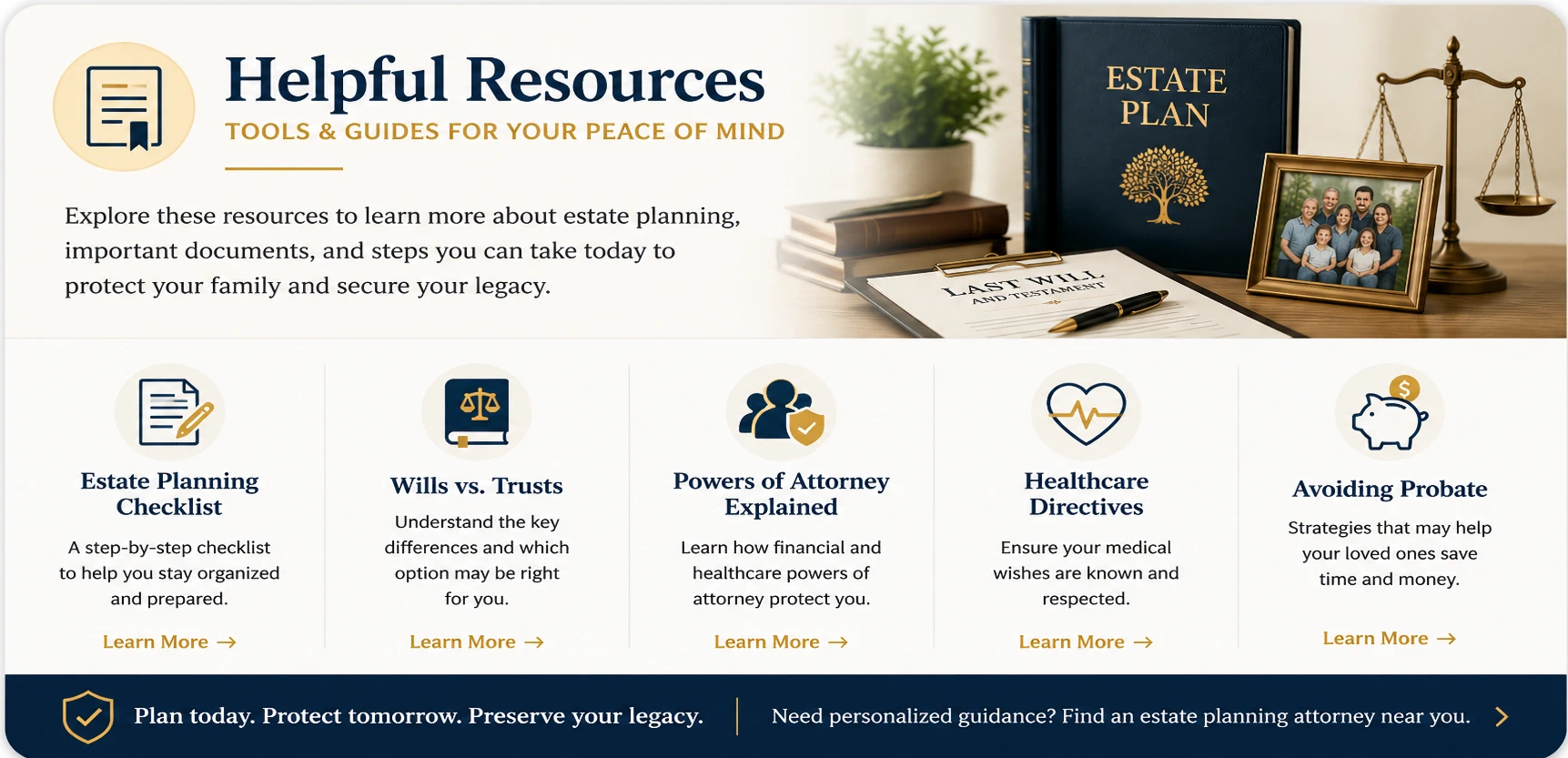
Before creating or updating an estate plan, it can be helpful to review information provided by official government agencies and other trusted organizations. The following resources offer educational information about estate planning, wills, trusts, powers of attorney, advance healthcare planning, probate, and related topics.

U.S. Department of Health & Human Services
Learn about advance care planning, healthcare directives, and making medical decisions before they're needed.

Internal Revenue Service (IRS)
Explore estate and gift tax information, filing requirements, and federal guidance for estate planning.

National Institute on Aging
Find practical information about advance care planning, healthcare decisions, and preparing important legal documents.

Benefits.gov
Learn how estate planning may affect government benefits, survivor benefits, and financial planning resources.

American Bar Association
Review educational resources about wills, trusts, probate, powers of attorney, and selecting an estate planning attorney.
Still Have Questions?
Find a Estate Planning Attorney
Every family and financial situation is unique, and the information provided in this guide is intended for general educational purposes only. If you have questions about wills, trusts, powers of attorney, advance healthcare directives, probate, protecting your assets, or planning for your family's future, speaking with an experienced Estate Planning attorney can help you better understand your legal options and create a plan that reflects your personal goals and wishes.